WASHINGTON (CN) – L’Oreal can settle false advertising claims over supposedly salon-only products that are sold in stores by changing its labels, a federal judge ruled.
Alexis Richardson had led a class against the cosmetics company on behalf of consumers who purchased L’Oreal’s Matrix Biolage, Redken, Kerastase and Pureology products after August 30, 2008.
The April 2013 complaint alleged that L’Oreal deceptively labeled the products as “available only in salons” while nevertheless stocking them in Target, Kmart and other non-salon retail establishments.
“Plaintiffs allege that the salon-only label implies a superior quality product and builds a cachet that allows L’Oréal to demand a premium price,” according to the settlement-approval ruling filed Thursday.
The plaintiffs had filed the suit in Washington, D.C., after resolving related claims from an earlier action in the Northern District of California.
“In the course of those negotiations, L’Oréal provided plaintiffs with extensive documents and information relating to its anti-diversion and labeling practices,” U.S. District Judge John Bates wrote.
“But plaintiffs allege that, despite L’Orèal’s efforts, the products are available in non-salon establishments, and argue that L’Orèal’s labeling and advertising for these products is hence deceptive and misleading.”
As part of the settlement, class representatives can petition for no more than $1,000 each, and L’Oréal will pay up to $950,000 in attorney fees, costs and expenses. The settlement otherwise provides only injunctive relief.
In his approval order, Bates explained the class’s reasons for not trying to certify a damages class.
“First, assessing the value of the salon-only claims to consumers would be difficult, and L’Oréal has never attempted to do so,” the ruling states. “Second, assessing damages on a class-wide basis would be even more difficult – the information provided during the negotiation process revealed substantial price variations among retailers and in different regions, and indicated that non-salon retailers often sell the products at a lower price than do salon retailers, making damages to those purchasing the product in non-salon establishments difficult to analyze.”
Bates said he would defer to counsel’s assessment.
“And class members will retain their right to seek damages in individual actions, dispelling many concerns about foregone payments,” he added. “In these circumstances, an equitable-relief-only settlement may be approved.”
If the settlement wins final approval, L’Oreal will remove the “salon only” label from all of its U.S. advertising and labeling on products distributed in the states.
It will also discontinue manufacturing the labels for its U.S. products, and it will remove the “salon-only” claims from its websites and from any promotion materials.
Both parties have agreed to publish legal notices in USA Today for one week, referring class members to a website that contains a copy of the proposed agreement. Any objections to the settlement must be filed before the Fairness Hearing on October 11, 2013, when the final settlement will be approved. It seems L’Oreal will get off easy for all the damages they have done to the so-called professional beauty industry. Their anti- diversion rhetoric is a bunch of bullshit. And always has been. Too late, Too little the damage has already been done!
Tag: products
Living Your Dreams Everyone!!

My award from Mopix and Discmakers for the film The Real Hair Truth .
Over 10,000 sold!
I cannot believe it has been over 3 years since the release of this film and it keeps on selling. Not much has really changed in this industry, and basically I don’t think anything will. You still have the manufacturers saying and playing there same ol, snake oil presentations. The vast majority of the industry is clueless to the facts of mislabeled products, ingredients, deception. And the old guard in this industry you will have to watch out for. They will say or do anything to get a job. So many of them rely on the name of a dead man to achieve their notoriety. And the websites are still the same. But the only thing that is different is the abundance of the amount of entrepreneurs within the industry. They are the true model of the professional industry! You can go ahead and play a role in the pyramid scheme in the industry, from the distributor on up to the CEO of a major manufacturer. Or take the road less traveled and blossom your talents and be everything you were meant to be. Giving your devotion to a manufacturer and buying into the hype of a false gimmick to sell, sell, sell. is a waste of your time and also of your talents. All you are doing is basically living someone else’s dream. But where do yours come in?
In my next film “The Beautiful Lies”, we give you some really devoted, talented entrepreneurs within the industry. These are professional who wanted to blossom into everything they can be. And follow the road less traveled. Following this path you will see so many new and exciting places, rewards, and you will also learn allot about yourself. Following some one else’s dreams and buying into their falsehoods to gain financial independence is pretty empty. The only out come is the top of the pyramid is gaining all, while you give all and receive nothing but false rhetoric. Verbs and nouns cannot pay your bills, by stating to you, ” we are behind you all, thank you for out continued success, we are family”, Really I think not! No, you need to take the time and look over these falsehoods, dreams being sold to you, etc. And become what you want in your profession. Write that book, Make the film, Make a product, etc. There is so much time in your life and you are given so many talents, why waste it on being a fan of another’s dream or dreams. This has been going on in our industry for many, many years. And from the production of my next film. I see more and more individuals seeking their own slice of the pie within the industry.
And that is the way it should be my friends!
Keratin Complex Deceptive Labeling, But promoted by the Industry!

“Drinking the Kool-Aid” refers to the 1978 Jonestown Massacre; the phrase suggests that one has mindlessly adopted the dogma of a group or leader without fully understanding the ramifications or implications. So in my industry we have a lot of sheep who cannot think for themselves. And we also have a lot of sheep who cannot seem to go beyond the actions of a written article to produce a original concept of warning the beauty industry of the ramification’s of believing in such “Hog wash”.
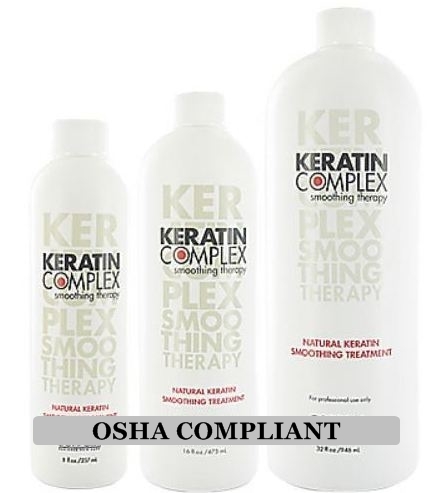
You will find a lot of watch-dog organizations in my beauty industry and also outside who will “Latch on”, to any cause to better themselves and by adding a visual example of looking out for your concerns. Pretty Toxic got in touch with me a few weeks ago and asked for information about some industry products that have had violations with OSHA and also the FDA. I provided the information they request and also asked if they would like to have a gathering were we could provide a think tank. To no avail and not even answering my emails, I was swept away. BOO HOOO. Keratin Complex is a company who has been cited by the OSHA for not being honest about there advertising or ingredient’s. If you look at the labeling at the top of the article you will see they have printed that there product is “OSHA Compliant”. Keratin Complex leads consumers to believe their product is safe and harmless, but this “Kool-Aid” has been sugar coated and the truth isn’t so sweet! Turns out the “benign” aldehyde they use, Timonacic acid, releases formaldehyde when heated and this product is making people sick. Keratin Complex, the global market leader in professional keratin smoothing treatments, is pleased to announce they are the first company and brand in this burgeoning category to receive formal OSHA (Occupational Safety and Health Administration) compliancy. OSHA does not authorize the use of there Logo and does not authorize any and all company’s to address themselves as being “APPROVED BY OSHA”. I put this right up with our “Little Man John and his deceptive practices!
This is a big “NO-NO’. Rick Gerstein, Chief Operating Officer, Keratin Complex says, “This compliancy underscores the level of product safety, safe practices and procedures that Keratin Complex has implemented and adheres to. It also reinforces our dedication to providing the finest, innovative and safe products to the professional salon community. We are delighted that OSHA has recognized our company and brand as compliant to their regulations and standards – a category first. As market leader, it has been, and continues to be, our utmost goal to support and partner with professional salons, spas and stylists and provide the finest quality products, services and education”. OSHA does not do any endorsements for any “Compliance Logo’s”, at all and as of this point OSHA as Keratin Complex under investigation for deceptive labeling. You will also find out this on the beauty industry “Flea Market Catalog, BTC”.
And of course the company went ahead and did the endorsement to OSHA, so they could save there “ASS”, and make the Bee sting a little less painful when they get cited for violations. ” The Occupational Safety and Health Act allows OSHA to issue workplace health and safety regulations. OSHA Safety Standards contain requirements for compliancy (i.e., testing and certification) of certain products by a Nationally Recognized Testing Laboratory (NRTL). Keratin Complex fully supports OSHA’s initiatives and standards in the professional beauty industry as part of the company’s ongoing commitment to innovative and safe professional products, services and education for salons and stylists worldwide”. Don’t believe this HORSE SHIT.
http://www.osha.gov/SLTC/images/shtp_banner_2011.png
Best Regards
Joseph Kellner.
How to file a complaint with OSHA if you are a Salon Employee or Booth Renter!
You know that industry we are in “The so-called professional beauty industry”, were everything is swept under the rug, and deception is rampant. Well if you are a salon employee or a booth renter and you feel you are working around chemicals that make you feel sick. They may be hazardous.
A salon owner has the responsibility to have proper ventilation in the salon and the proper posting of all MSDS Sheets provided from the manufacturer of the products you use for your salon services. If you are unsure just go to your salon owner and ask for the proper information.
Nine times out of ten they don’t have it and wouldn’t give you the time of the day to produce it for you. Your health is important and to be working around a atmosphere where you may have close to 10-20 employees or booth renters then salon products may vary depending on the interests of all the employees.
Take it upon yourself to find out if the products you are using are hazardous to you or your client. It is your health and your life and you have only one to live. TAKE CHARGE, TAKE RESPONSIBILITY!
The Occupational Safety and Health Act of 1970 gives employees and their representatives the right to file a complaint and request an OSHA inspection of their workplace if they believe there is a serious hazard or their employer is not following OSHA standards. Further, the Act gives complainants the right to request that their names not be revealed to their employers.Complaints from employees and their representatives are taken seriously by OSHA. It is against the law for an employer to fire, demote, transfer, or discriminate in any way against a worker for filing a complaint or using other OSHA rights. OSHA will keep your information confidential. We can help.
If you think your job is unsafe and you want to ask for an inspection, contact us. It is confidential. If you have been fired, demoted, transferred or discriminated against in any way for using your rights under the law, you must file a complaint with OSHA within 30 days of the alleged discrimination.
Employees or their representatives have a right to request an inspection of a workplace if they believe there is a violation of a safety or health standard, or if there is any danger that threatens physical harm, or if an “imminent danger” exists. Employee representatives, for the purposes of filing a complaint, are defined as any of the following:
- An authorized representative of the employee bargaining unit, such as a certified or recognized labor organization.
- An attorney acting for an employee.
- Any other person acting in a bona fide representative capacity, including, but not limited to, members of the clergy, social workers, spouses and other family members, and government officials or nonprofit groups and organizations acting upon specific complaints and injuries from individuals who are employees.
In addition, anyone who knows about a workplace safety or health hazard may report unsafe conditions to OSHA, and OSHA will investigate the concerns reported. Employees or their representatives must provide enough information for OSHA to determine that a hazard probably exists. Workers do not have to know whether a specific OSHA standard has been violated in order to file a complaint.
The following are examples of the type of information that would be useful to OSHA when receiving a complaint. It is not necessary to have the answers to all these questions in order to file a complaint. The list is provided here as a guide to help you provide as much complete and accurate information as possible:
- How many employees work at the site and how many are exposed to the hazard?
- How and when are workers exposed?
- What work is performed in the unsafe or unhealthful area?
- What type of equipment is used? Is it in good condition?
- What materials and/or chemicals are used?
- Have employees been informed or trained regarding hazardous conditions?
- What process and/or operation is involved?
- What kinds of work are done nearby?
- How often and for how long do employees work at the task that leads to their exposure?
- How long (to your knowledge) has the condition existed?
- Have any attempts been made to correct the problem?
- On what shifts does the hazard exist?
- Has anyone been injured or made ill as a result of this problem?
- Have there been any “near-miss” incidents?
Scum of my Beauty Industry!

Professional hair care companies as well as professional hair dressers try to spread fear amongst hair consumers by warning them about hair care products. Fear is a powerful emotion which can motivate in a variety of ways. Why do professional hairdressers hate hair product diversion? Quite simply if hair consumers buy from CVS, Walgreens or Amazon.com, they’re not buying from their salon professionals. From the beginning of time, professional hair product companies would promise professional hairdressers that they would only sell to them so that there would be no competition for any other marketplaces.
As a result, when a professional product line such as Aveda winds up in Amazon.com, professional hairdressers rise up in arms to try and stop the sale of the professional products by anyone but professional hair stylists and salons. The basic bottom line is that professional hairdressers just want to protect their sales territories.
Ask yourself how professional hair products make it to CVS or other large grocery chains? Contrary to what the professional hair companies might want you to believe, they aren’t delivered in SUVs by individual professional hairdressers who are selling out the back door of their salon. No! If a CVS sized retail outlet is buying professional products, and they are, it’s because the professional hair care company is either secretly selling directly to CVS or is looking the other way when it happens. Bottom line. Professional hair product manufacturers talk out of both sides of their mouths. The professional hair care companies have brainwashed hair consumers. In fact, in the Summer of 2008 “Good Morning America” had a segment that was focused on what has become known as Professional Hair Product Diversion. The segment spread the same fear based untruths that are often spread to hair consumers.
According to the professional hair care industry professional hair care products are only to be delivered and sold through professional salons, distributors or hairdressers. Anyone else selling professional hair care products such as Amazon.com or CVS or Target is officially selling “diverted products.” Yet why would large corporations like that take the risk to divert?
To try and minimize diversion, the professional companies will put out the fear based rumors that hair consumers who buy their professional hair care products from Amazon.com, Target or CVS are buying potentially contaminated products. Seriously, do you think that a major company like CVS and Target would risk consumer lawsuits over contaminated products? Think about that one.
The other rumors are that diverted products may be counterfeit. While I’m sure this is much more of a possibility, it is very unlikely. Yes, there have been some isolated cases but they are very rare. While major hair product manufacturers like Aveda might say they fight product diversion, if they had a hint that their products were being counterfeited they would swarm down on the store in question and seize the products in question. Why? Neither the manufacter or the retailer, like CVS, wants any legal problems from counterfeited products.
Besides falling under monitoring by the FDA, hair care products are chock full of preservatives to extend the shelf life of the products. Most hair care products have a shelf life of 3-4 years. Those very preservatives protect against the growth of any type of fungus or bacteria. If not, the products would be bulging at the seems and have a frightful odor. Just like rancid food products.
The hair care industry also hints at fungal and bacterial infestation. Is this a real danger? Again, unlikely. It is simply a scare tactic to keep hair consumers away from professional products sold over the counter.
It should be noted that many of the professional hair products found on the shelves of CVS are the latest packaging and the latest ingredients. How do I know? I have stopped to look at them in great detail. I have even taken labels from professional products purchased through professional outlets and have compared them. And yes I have interviewed buyers of companys.
Cost factors is the other diversion bugaboo. Is it true that diverted products cost more in non-authorized companies than authorized professional beauty outlets? In some cases yes but in other cases maybe not.
1. Competition in the professional hair product arena continues to explode. If a professional hair product company can sell trailor truckloads of their products to a CVS or Target and look the other way, why not? I’m not saying ALL professional companies do it, but I’m saying it happens. Probably more than you think.
Guess what, professional hairdressers know the truth. Most of them do anyway. I talked to so many hairdressers over the years who all call Hair Product Diversion the industry’s “dirty little secret.”
2. Good Business Plans. Hair consumers are cutting back on any hair related luxuries. Why would professional hair care companies promote the myth of professional diversion when it could cost them a strong growing sales base and a competitive edge with their competitors? Have they thought about that? I wonder.
3. Professional Hair Product Diversion Does Not Exist In The Rest Of The World. Hair product diversion only exists as an issue in the United States. In Europe and the rest of the world there is no Professional Hair Product Diversion issues. Hair consumers buy products from their professional hairdressers and salons but because they trust their hairdresser with the proper product recommendation and because of timing. The same should be true in the United States. Why isn’t it?
4. Professional Hair Publications Give Lip Service To Diversion Topics. Why? If a professional hair magazine or online newsletter is receiving advertising from a major professional hair care production company like an Aveda, they are definitely going to drink and share the Kool-aide. Money talks and advertising talks even louder.
Ultimately all hair consumers must think for themselves and not just believe what the hair product companies want us to believe. Before drinking the Kool-Aide of product diversion think about the realities of the situation.
Is the product in question fully stocked on the shelves? Is the entire line of products options available from shampoo to styling products? Are the products restocked on a regular basis? Do the products like brand new? They probably are.
Best Regards
Joseph Kellner
 The Real Hair Truth
You must be logged in to post a comment.