So Far The Beauty Industry in 2015 at a Glance

real hair truth

Comprised of a diverse yet interrelated set of business lines, the beauty industry helps us look and smell our best. Before we leave the house each day, we have likely undergone our personalized beautification ritual. Included in this ritual is the daily shower and shave, the weekly nail trim, and the monthly haircut. And increasingly we are taking a more holistic view of our health, and our beautification ritual may now include a periodic massage and trip to the spa. But our concern with our appearance is hardly anything new; indeed the beauty industry has been expanding and growing for all of recorded history. For the interested entrepreneur this continuing growth and evolution offers a diverse menu of opportunity.

The beauty industry today encompasses far more than cosmetics and skin care products, though they are still a significant portion of the sector. A wide range of services and products are available to help us put our best face forward, and the beauty industry now also encompasses hair styling and hair removal, nail and tanning salons,massage parlors, shower and shaving products, perfumes, colognes and more. Many people now treat their beauty ritual as an escape from the hustle of the information age, whether its a few minutes spoiling oneself with a high-end product or a full day at a luxury spa.

Lotions, Treatments and Baths. Oh my!

Beauty industry opportunities can be broadly separated between products and services, though many providers offer both. Within both products and services, however, exist a wide range of business models based on target market, production processes and location.

From exfoliating soaps and volumizing shampoos to anti-wrinkle creams, the beauty industry provides us with choices galore to keep us looking younger and healthier. Cosmetics exist for every style and taste, as well as every skin tone, texture and even allergy. Rows of toothpaste stretch off into the distance at the local retail outlet, and it is no longer a choice only of brand, but between whitening, tartar protection, flavor, packaging styles and more! And a similar story is told in the aisles for perfume, deodorant and hair coloring. Certain businesses also distinguish themselves through manufacturing processes such as using all natural ingredients or a refusal to use animal testing on products.

While the diversity among service providers is not quite as extensive, there is considerable differentiation between offerings based on price, location and target markets. Some businesses target the inexpensive, fast hair cut market while others focus on providing a luxury spa experience. Franchise opportunities exist for hair salons, skin treatments, nail care, and tanning. Niche providers offer products and services focused on children, weddings,  and fashion, among others.

Different Beauty Franchise Opportunities

  • Hair Care
    • Stylists
    • Salons
    • Shampoos/Conditioners
    • Coloring Product
    • Styling Product (Gels, Sprays, etc.)
  • Cosmetics & Skin Care
    • Make-Up
    • Moisturizing Lotions
    • Tanning Salons
    • Sun Care Products
  • Fragrance

    • Perfumes
    • Body Sprays
    • Cologne
    • Deodorants
  •  Miscellaneous
    • Nail Polish
    • Shaving Products
    • Massage Parlors
    • Hair Removal Service

Beauty Industry Trends

Such diversity and innovation exists because we demand it. The beauty industry continues to expand globally, with some projections claiming 8.5% growth by 2014; revenue growth in 2010 is estimated at 3.3%. Several trends support this expansion and promise continued profitability into the future.Globally, rising per capita incomes and greater access to international markets are increasing spending on discretionary items such as perfumes and cosmetics. Though the recent economic turmoil had decreased spending on some discretionary products in the United States, purchasing of beauty products has remained strong. Consumers did tend to be more price-conscious however, with over 70% of survey respondents claiming to give mass market products more consideration over high-end products during the downturn.

Perhaps not as surprising as it once was, one of the fastest growing segments of the beauty industry is products and services aimed at men. Traditionally focused on female consumers, men today are gaining increasing attention from the beauty industry. Of course most of us have been using deodorant and toothpaste for several months already, but increasingly men are being targeted for body sprays, specialty hair products, lotions and even nail care. Salons offer a menu of pampering services for men, including cuts and shaves, facials, massages and manicures.

Consumers of beauty industry products tend to be brand loyal, and share what works for them with their friends. 58% of those surveyed claimed that personal recommendations weigh more heavily than celebrity marketing, and only 44% bought a particular product for its claim of specific product attributes. Like many things, beauty products gain a level of familiarity and comfort for the consumer, and switching to a new product often takes some extra incentive. Popular and successful marketing campaigns in the beauty industry often include a free sample and discounts for referrals to lure new customers in, and loyalty programs to keep them.

Beauty Industry Franchise Opportunities

From product innovation, organic industry growth and continued growth into the male half of the population, the beauty industry continues to offer a diverse set of profitable franchising opportunities. Beauty franchises exist across the space with dozens of strategies reaching all types of consumer.

Retail opportunities include brick-and-mortar store locations as well as home-based businesses, and span across cosmetics, skin care, hair care, tanning and more. Frequently producers of beauty industry products will have a franchising distribution system, or even have training locations for service providers. Cosmetic and skin care entrepreneurs offer specialized services such as nail care and tanning, a complete menu designed for the full day experience and everything in between. Some salons offer an exclusive membership experience and others specialize on walk-in business.

Hair care opportunities exist for barbers and stylists alike, with a range of different franchises available based on cost, location, and gender. Many male-focused franchises offering everything from the basic barbershop to “the ultimate relaxed grooming experience” have been springing up to complement the traditionally female-focused salon offerings. Franchise chains devoted to children offer a more entertaining environment for kids. There are also businesses focused on hair removal and coloring. Eco-friendly salons such as the Splish franchise offer hair care in an environmentally conscious environment.

As we can see, the beauty industry encompasses a wide range of products and services, and franchising plays a major part in bringing them to the consumer. As the industry continues to grow and evolve, profitable opportunities will abound…the hard part is choosing which one!
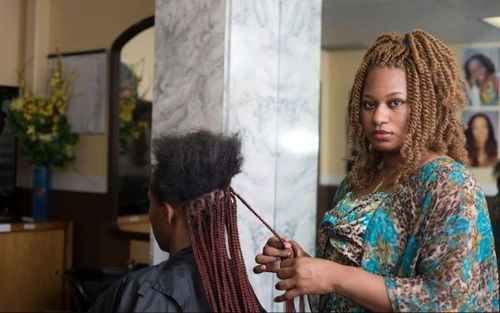
African hair braider’s recent victory in Washington.

The Real Hair Truth

In the current political climate where government agencies shut down small businesses for irrational reasons, an African hair braider’s recent victory in Washington state could signal a turning point for entrepreneurial freedom.

The mission of the Washington State Department of Licensing (DOL) is to advance public safety and consumer protection.  So how did this agency get tangled up in a federal lawsuit about hair braiding?

In June 2014, hair braider Salamata Sylla filed a federal lawsuit against the Washington DOL, because the agency had ordered her to either get a cosmetology license, or shut down her business.  Sylla was represented in her lawsuit by the Institute for Justice.

Read More of this article

Defective Product Personal Injury Lawsuits

The Beautiful Lies

Defective product litigation and injury lawsuits involve defective and unreasonably dangerous products that cause personal injuries and even death. Manufacturers of defective products are liable for design defects, improper safety devices and manufacturing defects that cause injury.

Product liability lawyers will evaluate cases involving defective consumer goods that cause physical injuries such as burns, fractures, head injuries and blindness. Lawsuits can be brought against manufacturers for design defects, improper safety devices and manufacturing defects, and marketing defects (failure to warn of possible hazards). Injuries, deaths and property damage from defective and recalled products cost the public more than $500 billion each year.  There are four legal means for establishing liability in personal injury cases where a defective product has caused injury.

  • Negligence occurs when expected, reasonable care is not taken and a legal responsibility exists to do so. The lack of care can be the result of carelessness or even malice. Negligence can occur when defective parts or improper assembly results in a dangerous or malfunctioning product.
  • Breach of warranty takes place when a seller fails to uphold a claim or promise about a product.
  • False advertising that leads consumers to believe a product is safer than it really is, or distracts them from potential risks inherent in the use of a product, can be argued as misrepresentations under breach of warranty or under strict liability.
  • “Strict liability” makes the manufacturer or seller of a defective product responsible for all injuries occurring from the use of the product. The victim must show that the product was defective, and that the defect was the cause of the personal injury. If so proven, then strict liability holds the manufacturer or seller responsible, regardless of fault or intent. “Strict liability” means everyone involved in the making of a consumer product is potentially liable for any personal injury that results from using the product.

There are three main types of product defects that can result in a personal injury.  These occur before the product is created, in the initial design and planning stage.These flaws result from mistakes that take place during the actual manufacturing stage.  Advertising misrepresentations occur when sellers do not provide adequate warnings or instructions, or define the potential risks of using the product.  More than one party may be legally responsible for a personal injury, i.e. the designer, manufacturer, wholesaler, retailer, advertiser, etc.

You may need to know how old the product is that injured you. Most states have laws limiting how long the manufacturer or seller can be held liable for personal injuries. The limits are usually from six to 12 years after the product was first sold on the market.

Product liability cases usually involve products such as toys, automobile design, household products, industrial machinery and equipment, farm machinery, products causing explosions and burns, aviation products, medical devices or drugs and any other defective or unreasonably dangerous product.

A “defective product” is one that causes some injury or damage to person because of some defect in the product or its labeling or the way the product was used. The manufacturer, and others involved in the chain of commerce involving the products that caused the injury, are often liable for injuries defective products cause.

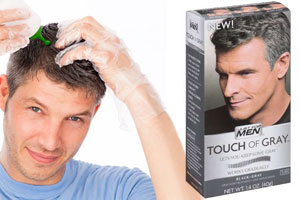
Help for Those Who Suffered Chemical Burns, Allergic Reactions After Using ‘Just For Men’

Just-For-Men-Chemical-Burns

Contact Parker Waichman LLP today if you experience any of these symptoms after using Just For Men:

Swelling
Burning Sensation
Severe Itching
Blistering
Skin Rash
Weeping Sores
Scarring

Chemical Burns, Swelling, Itching

Even though Just For Men has been on the shelves since 1987, there have been a number of recent reports that the dye caused blisters, itching and chemical burns. Consumer Affairs highlights these painful experiences, citing one user who needed emergency medical care after applying the dye. “I applied the beard dye as detailed in the directions,” wrote Sean Brockton of Massachusetts in the Consumer Affairs comments section. “I had a burning sensation as well, and after rinsing it off, I thought I was fine. The next day, my face and neck had swollen up horribly. The following morning my skin had begun to weep as well, and I went to the ER. I was admitted immediately, as it looked horrible. They were concerned about my throat swelling shut. I am nearly 50 and do not have any allergies that I know of. Whatever is in this stuff is harsh. I needed steroids and Benadryl.” Customers who have been using the dye for years suspect that the formula has recently changed. J of Marietta, Georgia, wrote to Consumer Affairs that “I’ve been using it for over 10 years with no problems and in the past couple of weeks whenever I use it, there is a burning and itching. I’m going to switch to something less harsh,” According to Consumer Affairs, a company representative claims that the formula has not changed in recent years. That representative also said that users should do an allergy test before each application by testing a small patch on the inside bend of the elbow, allow it to dry, and examine it for a reaction over the next 48-hours.

Consumer Affairs points out that, based on the product label, it appears that the company knows that Just For Men can cause these symptoms. The warning reads “Rapidly spreading skin rash, dizziness, faintness, difficulty breathing, shortness of breath, tightness of chest, hives or swelling to eyes/face, blistering of skin or scalp weeping, seek immediate medical attention,” Ultimately, Consumer Affairs questioned whether or not this product is worth using if these are the risks.

Testing for Allergic Reactions

Just for Men users are advised to conduct an “allergy patch test” to determine if they will experience symptoms such as burning, itching, and painful blisters. The Just for Men website provides detailed instructions. A company representative told Consumer Affairs that it was important to perform this allergy test each time before the dye is used. This is necessary even for long-time users, the representative said, because the body chemistry may change at any time.

In the 48 hours following the test, users are told to look out for negative reactions such as stinging, burning, and/or rash. If these symptoms occur, users should stop using the dye and seek medical attention before attempting to color their hair again, the label reads. The warning says to seek immediate medical help if more serious symptoms occur, including a spreading skin rash, dizziness, faintness, difficulty breathing, shortness of breath, tightness of chest, hives or swelling to the eyes/face, blistering of skin, or scalp weeping.

As Consumer Affairs points out, it is interesting to note that the company expects the same negative symptoms reported by users. This indicates that the company knows about the potential dangers.

Testing for Allergic Reactions

Just for Men users are advised to conduct an “allergy patch test” to determine if they will experience symptoms such as burning, itching, and painful blisters. The Just for Men website provides detailed instructions. A company representative told Consumer Affairs that it was important to perform this allergy test each time before the dye is used. This is necessary even for long-time users, the representative said, because the body chemistry may change at any time.

In the 48 hours following the test, users are told to look out for negative reactions such as stinging, burning, and/or rash. If these symptoms occur, users should stop using the dye and seek medical attention before attempting to color their hair again, the label reads. The warning says to seek immediate medical help if more serious symptoms occur, including a spreading skin rash, dizziness, faintness, difficulty breathing, shortness of breath, tightness of chest, hives or swelling to the eyes/face, blistering of skin, or scalp weeping.

As Consumer Affairs points out, it is interesting to note that the company expects the same negative symptoms reported by users. This indicates that the company knows about the potential dangers.

Legal Help for Those Who Suffered Chemical Burns, Allergic Reactions After Using ‘Just For Men’

If you or a loved one suffered from pain, discomfort, chemical burns, swelling or any type of allergic reaction after using Just For Men, you may be eligible for compensation. To find out more about your legal rights, please fill out our online form to the right or call us today at 1(800) YOUR LAWYER (1-800-968-7529).