Fear The Shear

fear the shear

Started and crafted by Jay Christian Hairdresser in Delaware, and also one of the characters in my next Documentary, The Beautiful Lies”.  This group will collectively serve as a catalyst for change in the beauty industry by restoring the power for the professional, raising awareness of organizations that support this mission, by resisting market penetration of any organization with bipolar marketing strategies; engaging in diversion and unfair pricing practices. We will inspire new talent to expand their way of thinking and to take conscious steps toward restoring power, pride, and prestige to this industry.

Some of the topics of this group come with a wide range of idea’s and personnel philosophy’s. Below are a few of the articles that are debated on this social networking site.

1.  If you can’t measure it, it’s not worth doing. Goals are immensely important to mapping growth. Do you set goals for your staff?  Yourself?  Which ones are most important in our profession?

2.  Just doing what you love won’t make you successful. You’ve got to go after success hard. Never let up. Read everything about the business you love. Learn the BUSINESS of the business you love. Find a mentor. Be a mentor. Get up, dress for it, practice until your icons become your peers. No just loving what you do will not make you successful. Passion, practice, grit, and drive do.

3. That time to is now. We have been holding back because change takes effort. While you’ve been in a state of plausible deniability, they are transferring profits out from under you. Who is willing to seriously make a change? We’ve talked long enough.

4. When someone uses the word “discount” in their marketing idea I cringe. You don’t have to undersell yourself to get clients, you just have to bring value. Do something to show yourself and your salon in a positive light as community contributors, as socially conscientious, you get it. Otherwise, you lower the client’s perception of your value.

Good Luck Jay Christian hope you can change your industry!

Check out the Network My Friends  FEAR THE SHEAR

Sulfate Free Shampoo Is “A Marketing Gimmick.”

real hair truthSulfate-free shampoo is a new form to trying to get people’s attention, “a marketing gimmick.” The hair industry is a billion dollar business. . Example: Green tea is the new trend and it is healthier for you, or buying coffee at Starbucks, they taste sweeter. More profits for them. BK’s green tea had been recalled, or the eggs, is that mean people won’t be buying green tea or eggs anymore? The hair industry wants your attention, but they don’t give money back guarantee for damaged hair or hair loss.

It would be boring if they just call it shampoo! Google shampoo, it’s meant to clean. They want a variety of product, to attract a variety of hair textures/condition/smell.

There are sulfates in many of the everyday products we use at home! Sulfates on shampoo doesn’t cause cancer. But Google hair dyes & cancer. Many customers and stylists do not know that Brazilian treatment often contains high concentrations of formaldehyde, a cancer-causing chemical and there’s been so much publicity during the last year. Google Permanently straightening hair warning, about 7,410,000 results (0.08 seconds) , more warnings during the last month. I’ve been posting about them since 2009. Canada had issued a public health warning regarding Brazilian Blowout and has stopped the distribution of their salon products; Ireland has also issued a recall. ~ Also published in Vogue Feb. 2011.

How about Mane & tail people think it makes their hair grow faster. Mane & Tail is another shampoo meant for horses. Horses don’t abuse their hair, using heating tools, and they eat better than people, but it won’t add more hair & make their hair longer faster. Shampoo intended for animals may contain insecticides or other medications for treatment of skin conditions or parasite infestations such as fleas or mange. These must never be used on humans.

When you wash your hair with one of those nutrient-rich shampoos, most of the nutrients and active ingredients in the product don’t actually end up in your hair, they wind up down the drain… along with all the money you spent on the shampoo.
It is HOW you use to style your hair or what styling tools that damage the hair, and what chemicals you’re adding to the hair, not the shampoo.

So what can you expect from switching to a sulfate-free shampoo? A higher price tag, to start, as most drug store brands don’t yet produce products without sulfates.  Perhaps the biggest adjustment to using sulfate-free shampoo is a superficial one. Without this lather-producing chemical, these shampoos have less of the over-the-top bubble that is associated with cleansing hair.  Its all a bunch of baloney!

FYI: “CRUELTY FREE” OR “NOT TESTED IN ANIMALS” MEANS THAT NO ANIMAL TESTING WAS DONE ON THE PRODUCT AND ITS INGREDIENTS.
Believe it or not
Even if a product never was tested in animals, there’s a very good chance its ingredients were. A company might call its products “cruelty free” because it isn’t doing any animal testing on these ingredients now, although the ingredients may have been tested on animals in the past. In some cases, “no new animal testing” might be a more accurate claim.

So Far The Beauty Industry in 2015 at a Glance

real hair truth

Comprised of a diverse yet interrelated set of business lines, the beauty industry helps us look and smell our best. Before we leave the house each day, we have likely undergone our personalized beautification ritual. Included in this ritual is the daily shower and shave, the weekly nail trim, and the monthly haircut. And increasingly we are taking a more holistic view of our health, and our beautification ritual may now include a periodic massage and trip to the spa. But our concern with our appearance is hardly anything new; indeed the beauty industry has been expanding and growing for all of recorded history. For the interested entrepreneur this continuing growth and evolution offers a diverse menu of opportunity.

The beauty industry today encompasses far more than cosmetics and skin care products, though they are still a significant portion of the sector. A wide range of services and products are available to help us put our best face forward, and the beauty industry now also encompasses hair styling and hair removal, nail and tanning salons,massage parlors, shower and shaving products, perfumes, colognes and more. Many people now treat their beauty ritual as an escape from the hustle of the information age, whether its a few minutes spoiling oneself with a high-end product or a full day at a luxury spa.

Lotions, Treatments and Baths. Oh my!

Beauty industry opportunities can be broadly separated between products and services, though many providers offer both. Within both products and services, however, exist a wide range of business models based on target market, production processes and location.

From exfoliating soaps and volumizing shampoos to anti-wrinkle creams, the beauty industry provides us with choices galore to keep us looking younger and healthier. Cosmetics exist for every style and taste, as well as every skin tone, texture and even allergy. Rows of toothpaste stretch off into the distance at the local retail outlet, and it is no longer a choice only of brand, but between whitening, tartar protection, flavor, packaging styles and more! And a similar story is told in the aisles for perfume, deodorant and hair coloring. Certain businesses also distinguish themselves through manufacturing processes such as using all natural ingredients or a refusal to use animal testing on products.

While the diversity among service providers is not quite as extensive, there is considerable differentiation between offerings based on price, location and target markets. Some businesses target the inexpensive, fast hair cut market while others focus on providing a luxury spa experience. Franchise opportunities exist for hair salons, skin treatments, nail care, and tanning. Niche providers offer products and services focused on children, weddings,  and fashion, among others.

Different Beauty Franchise Opportunities

  • Hair Care
    • Stylists
    • Salons
    • Shampoos/Conditioners
    • Coloring Product
    • Styling Product (Gels, Sprays, etc.)
  • Cosmetics & Skin Care
    • Make-Up
    • Moisturizing Lotions
    • Tanning Salons
    • Sun Care Products
  • Fragrance

    • Perfumes
    • Body Sprays
    • Cologne
    • Deodorants
  •  Miscellaneous
    • Nail Polish
    • Shaving Products
    • Massage Parlors
    • Hair Removal Service

Beauty Industry Trends

Such diversity and innovation exists because we demand it. The beauty industry continues to expand globally, with some projections claiming 8.5% growth by 2014; revenue growth in 2010 is estimated at 3.3%. Several trends support this expansion and promise continued profitability into the future.Globally, rising per capita incomes and greater access to international markets are increasing spending on discretionary items such as perfumes and cosmetics. Though the recent economic turmoil had decreased spending on some discretionary products in the United States, purchasing of beauty products has remained strong. Consumers did tend to be more price-conscious however, with over 70% of survey respondents claiming to give mass market products more consideration over high-end products during the downturn.

Perhaps not as surprising as it once was, one of the fastest growing segments of the beauty industry is products and services aimed at men. Traditionally focused on female consumers, men today are gaining increasing attention from the beauty industry. Of course most of us have been using deodorant and toothpaste for several months already, but increasingly men are being targeted for body sprays, specialty hair products, lotions and even nail care. Salons offer a menu of pampering services for men, including cuts and shaves, facials, massages and manicures.

Consumers of beauty industry products tend to be brand loyal, and share what works for them with their friends. 58% of those surveyed claimed that personal recommendations weigh more heavily than celebrity marketing, and only 44% bought a particular product for its claim of specific product attributes. Like many things, beauty products gain a level of familiarity and comfort for the consumer, and switching to a new product often takes some extra incentive. Popular and successful marketing campaigns in the beauty industry often include a free sample and discounts for referrals to lure new customers in, and loyalty programs to keep them.

Beauty Industry Franchise Opportunities

From product innovation, organic industry growth and continued growth into the male half of the population, the beauty industry continues to offer a diverse set of profitable franchising opportunities. Beauty franchises exist across the space with dozens of strategies reaching all types of consumer.

Retail opportunities include brick-and-mortar store locations as well as home-based businesses, and span across cosmetics, skin care, hair care, tanning and more. Frequently producers of beauty industry products will have a franchising distribution system, or even have training locations for service providers. Cosmetic and skin care entrepreneurs offer specialized services such as nail care and tanning, a complete menu designed for the full day experience and everything in between. Some salons offer an exclusive membership experience and others specialize on walk-in business.

Hair care opportunities exist for barbers and stylists alike, with a range of different franchises available based on cost, location, and gender. Many male-focused franchises offering everything from the basic barbershop to “the ultimate relaxed grooming experience” have been springing up to complement the traditionally female-focused salon offerings. Franchise chains devoted to children offer a more entertaining environment for kids. There are also businesses focused on hair removal and coloring. Eco-friendly salons such as the Splish franchise offer hair care in an environmentally conscious environment.

As we can see, the beauty industry encompasses a wide range of products and services, and franchising plays a major part in bringing them to the consumer. As the industry continues to grow and evolve, profitable opportunities will abound…the hard part is choosing which one!
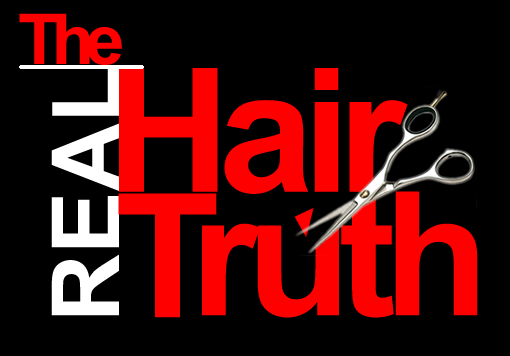
Palette Perfect Care Color By Schwarzkopf Sells out the Beauty Industry Professional!

Real Hair Truth/ Joseph KellnerAlright here comes another company selling out the professional cosmetologist! Schwarzkopf Hair Color. Gone are the days of loyalty, and contracts. Now another major hair color line has made a product for home hair coloring services. Yes, just do it yourself. No need to pay a 30-40 year professional in the industry the salon price, just buy it from the manufacturer who distributes to the professional. Money, Money, Money that’s what it all comes down too. So if all your life you have been going to a salon for that perfect hair color, and your house went up in foreclosure, your husband divorced you, or you are now working two jobs Palette Perfect Care Color is hear to help you! A sharp recession that pretty much devastated the Beauty Industry almost ten years ago has another sword in the back. But what I find interesting is there are so many young professionals in the industry willing to work for a dozen or so tubes of hair color and stand on a stage to sell the shit!  Remarkable, just remarkable. To be in a industry where you are in complete competition with the manufacturer, and they have no regard for you. And you helped make there company. Amazing. Simply amazing. But that won’t stop tomorrow, the young professional now, I declare knows no difference from a bobby pin and a hair pin. They will keep buying the crap now and latter they will suffer there loses. Schwarzkopf Palette Perfect Care Color.

RealHairTruth


The big conglomerate that owns Schwarzkopf is Henkel, Founded in 1876, Henkel is a global leader in the consumer and industrial businesses with brands such as Persil, Schwarzkopf and Loctite. Headquartered in Dusseldorf, Germany, Henkel employs about 47,000 people worldwide and the company’s preferred shares are listed in the German stock index DAX.


Real Hair Truth/Joseph KellnerGotta have the No Ammonia! My Dear Lord Help Us All!

Real Hair Truth/Joseph KellnerAnd for all you scum bags who like to stand on a stage and have your ego’s filled make sure you tell the audience to buy the product on EBAY!

Real Hair TruthBuy Now On Stucco

Maybe the PBA or Hairbrainned can help us all!

LOLOLOLOLLOLOLOLOLO

RealHairTruth.comBuy Now On BuyCheapr.com

And the list go’s on and on and on.

What a lovely Industry it is!

Lololololollol


8 chemical ingredients that are among the most dangerous to you in the shower!

The Real Hair TruthThink about this: Nary a day goes by when we don’t use beauty products – toothpaste, shampoo, conditioner, lotion, moisturizer, deodorant, soap, shaving cream and perfume, among others. The list could go on and on. We use them so often, we cast them off as harmless and simple, everyday necessities. The truth is, they are anything but harmless and can be replaced easily with safer alternatives. You see, over time, these supposed “harmless” products’ hazardous ingredients compound and grow in the body, ultimately allowing a bunch of little doses to add up to a much bigger problem.  The following 8 ingredients are among the most dangerous found in common beauty products. Most of them are skin irritants that have cancer-causing effects.

My rule of thumb is to never put a product on my skin or hair that has ingredients in it I cannot pronounce. This has meant getting used to DIY beauty products as well as all-natural options found at my local health store. But if you enjoy the convenience and the price of mainstream products, at least avoid these 8 offenders.

1. Triclosan
Triclosan is an antimicrobial agent that is one of the most common additives found in everyday consumer products, such as shampoo, toothpaste and soap. A study conducted by the University of California, San Diego School of Medicine linked triclosan to cancer. Triclosan also creates resistant bacteria, which can represent a potentially severe public health risk.
Synonyms: 2,4,4′-Trichloro-2′-Hydroxy Diphenyl Ether; 5-Chloro-2- (2,4-Dichlorophenoxy) – Phenol; 5-Chloro-2- (2,4-Dichlorophenoxy) Phenol; Phenol, 5-Chloro-2- (2,4-Dichlorophenoxy) -; Phenol, 5chloro2 (2,4dichlorophenoxy) ; 2,4,4′-Trichloro-2′-Hydroxydiphenyl Ether; 5-Chloro-2- (2,4-Dichlorophenoxy) Phenol; Ch 3565; Irgasan; Irgasan Dp300; Phenol, 5-Chloro-2- (2,4-Dichlorophenoxy)

2. Methylisothiazolinone (MIT or MI)
Used as a preservative in baby wipes and lotions, MI is a skin irritant that has long been associated with allergic reactions. It has also exhibited neurotoxic effects.
Synonyms: 2-Methyl- 3 (2h) -Isothiazolone; 2-Methyl-2h-Isothiazol-3-One; 2-Methyl-3 (2h) -Isothiazolone; 2-Methyl-4-Isothiazolin-3-One; 3 (2h) -Isothiazolone, 2-Methyl-; 3 (2h) Isothiazolone, 2methyl; Methylchloroisothiazolinone225methylisothiazolinone Solution; 2-Methyl-3 (2h) -Isothiazolone; 2-Methyl-4-Isothiazolin-3-One

3. Sodium Lauryl Sulfate (SLS) and Sodium Laureth Sulfate (SLES)
Both of these chemicals are toxic to the body and the environment, with SLES slightly more hazardous since it is often contaminated with 1,4 Dioxane (see #4). SLS and SLES work to make beauty products more easily absorbed by the skin. They are linked to skin, eye and lung irritation as well as organ system toxicity.
SLS synonyms: Monododecyl Ester Sodium Salt Sulfuric Acid; Sodium Dodecyl Sulfate; Sodium Dodecyl Sulphate; Sodium Lauryl Sulfate Sodium Lauryl Sulfate; Sodium Salt Sulfuric Acid, Monododecyl Ester; Sulfuric Acid Monododecyl Ester Sodium Salt; Sulfuric Acid, Monododecyl Ester, Sodium Salt; Ai3-00356; Akyposal Sds; Aquarex Me; Aquarex Methyl
SLES Synonyms: Ethanol, 2 [2 (Dodecyloxy) Ethoxy], Hydrogen Sulfate, Sodiumsal; Sodium 2- (2-Dodecyloxyethoxy) Ethyl Sulphate; Sodium Lauryl Di (Oxyethyl) Sulfate

4. 1,4 Dioxane
This chemical is a known carcinogen. It can fall under the umbrella of SLES (see #3) or a slew of other ingredients listed below as a contaminant, or it may not even be listed at all. It contaminates up to 46 percent of personal care products. The chemical is a byproduct of an ingredient processing method called ethoxylation used to reduce the risk of skin irritation for petroleum-based ingredients. Even though 1,4 dioxane can be easily removed from products before sale, it often is not.
Possible impurity in: Polysorbate-20, Sodium Laureth Sulfate, Peg-100 Stearate, Polysorbate-60, Ceteareth-20, Cetyl Peg/ Ppg-10/ 1 Dimethicone, Laureth-7, Peg/ Ppg-18/ 18 Dimethicone, Peg-40 Hydrogenated Castor Oil, Polysorbate-80, etc.
Synonyms: 1,4-Diethylene Dioxide; 1,4-Dioxacyclohexane; Di (Ethylene Oxide); Diethylene Dioxide; Diethylene Dioxide (Osha); Diethylene Ether; Diokan; Dioksan (Polish); Diossano-1,4 (Italian); Dioxaan-1,4 (Dutch); Dioxan

5. Oxybenzone
Often found in spray-on sunscreens, oxybenzone is a major hormone disruptor. It causes biochemical and cellular level changes. It is easily absorbed by the skin and has been determined to contaminate the bodies of 97 percent of Americans.
Synonyms: Benzophenone-3, (2-Hydroxy-4-Methoxyphenyl) Phenyl- Methanone; (2-Hydroxy-4-Methoxyphenyl) Phenylmethanone; 2-Benzoyl-5-Methoxyphenol; 2-Hydroxy-4-Methoxybenzophenone; 4-08-00-02442 (Beilstein Handbook Reference) ; 4-Methoxy-2-Hydroxybenzophenone; Advastab 45; Ai3-23644; Anuvex; B3; Benzophenone, 2-Hydroxy-4-Methoxy

6. Butylated hydroxyanisole (BHA) and butylated hydroxytoluene (BHT)
Already banned in the EU, BHA and BHT are used as stabilizers and preservatives in beauty products. BHA is considered a human carcinogen. BHT is a toluene-based ingredient that is a moderate irritant and has tumor-promotion effects.
BHA Synonyms: Antioxyne B; Antrancine 12; Eec No. E320; Embanox; Nipantiox 1-F; Protex; Sustane 1-F; Tenox Bha
BHT Synonyms: Dbpc; Advastab 401; Agidol; Agidol 1; Alkofen Bp; Antioxidant 29; Antioxidant 30; Antioxidant 4; Antioxidant 4k; Antioxidant Kb; Antrancine 8

5. Oxybenzone
Often found in spray-on sunscreens, oxybenzone is a major hormone disruptor. It causes biochemical and cellular level changes. It is easily absorbed by the skin and has been determined to contaminate the bodies of 97 percent of Americans.
Synonyms: Benzophenone-3, (2-Hydroxy-4-Methoxyphenyl) Phenyl- Methanone; (2-Hydroxy-4-Methoxyphenyl) Phenylmethanone; 2-Benzoyl-5-Methoxyphenol; 2-Hydroxy-4-Methoxybenzophenone; 4-08-00-02442 (Beilstein Handbook Reference) ; 4-Methoxy-2-Hydroxybenzophenone; Advastab 45; Ai3-23644; Anuvex; B3; Benzophenone, 2-Hydroxy-4-Methoxy

6. Butylated hydroxyanisole (BHA) and butylated hydroxytoluene (BHT)
Already banned in the EU, BHA and BHT are used as stabilizers and preservatives in beauty products. BHA is considered a human carcinogen. BHT is a toluene-based ingredient that is a moderate irritant and has tumor-promotion effects.
BHA Synonyms: Antioxyne B; Antrancine 12; Eec No. E320; Embanox; Nipantiox 1-F; Protex; Sustane 1-F; Tenox Bha
BHT Synonyms: Dbpc; Advastab 401; Agidol; Agidol 1; Alkofen Bp; Antioxidant 29; Antioxidant 30; Antioxidant 4; Antioxidant 4k; Antioxidant Kb; Antrancine 8

Your beauty products may boost your outer beauty, but do they support your inner health? Most beauty products contain ingredients that harm your body more than they help it and in an alarmingly dangerous way. Take the time to read the back of your beauty products and see what really is going into your skin with every lather, rub and scrub.