Independent workers: When do we get unemployment?

Hair dressers, gig drivers, landscapers, freelancers and other independent contractors who work for themselves normally don’t qualify for unemployment benefits.  But these aren’t normal times.

The $2 trillion government stimulus program is supposed to finally give unemployment benefits for millions of self-employed people who do not pay into the unemployment compensation system as full-time employees do.  However, many of them are growing more nervous by the day as they wonder when they will see the money.  Laura Grant, like many people on furlough right now, is desperately trying to reach her state’s unemployment hotline to learn if she now qualifies for benefits. Grant is a hair stylist who manages a six-person salon called Beneath the Crown in Florence, Kentucky. All the employees are independent contractors who rent booths. She’s had no luck reaching a live person in Kentucky’s unemployment office. Every time she calls, thousands of other people are trying to do the same.  Hair salon workers, freelancers waiting for stimulus aid.

Laura Grant, like many people on furlough right now, is desperately trying to reach her state’s unemployment hotline to learn if she now qualifies for benefits.  Grant is a hair stylist who manages a six-person salon called Beneath the Crown in Florence, Kentucky. All the employees are independent contractors who rent booths.  She’s had no luck reaching a live person in Kentucky’s unemployment office. Every time she calls, thousands of other people are trying to do the same. She and her fellow stylists have tried filing online for unemployment benefits but have had no luck because they have no “employer.”  “I was able to fill it out, but in the employer section, I had to put ‘self employed,’ so it denied me,” she said. President Trump and state leaders have announced that the stimulus package specifically provides benefits for self-employed and gig workers, but these hair stylists and millions of other workers like them have yet to see it.  Workers at Beneath the Crown are praying it happens. Until it does, they’ll be facing down looming bills without any way to pay.  “It’s been two weeks and I haven’t had any income,” Grant said. “We all have car payments. There are a couple of single moms who work here, so we are all up in the air and we don’t know what to do.”

Kentucky’s unemployment office says self-employed workers should fill out the online forms anyway, and the state government will “fix the issue at the back end” when the federal money comes through. Other states are also telling independent workers to file, even if the form rejects them at this point.  Grant hopes it happens soon. In the meantime, she’s trying to live by the message in her lobby: “Think positive and positive things will happen.

Regis, Great Clips want to be leaders in reopening process. Lolololol


Legalize Wedding Hair And Makeup In Minnesota


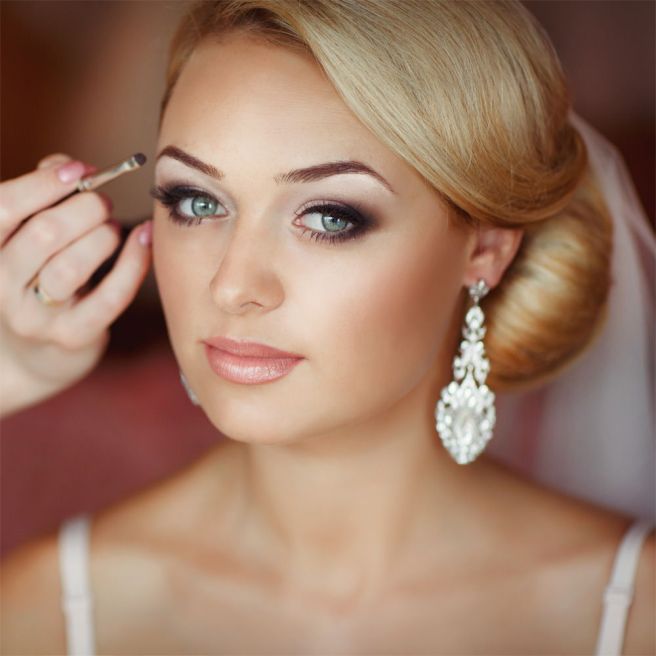
For years, Minnesotan beauticians have styled hair and applied makeup at weddings, proms, and other major social gatherings where people want to look their finest. But now a crackdown threatens to throw about 1,000 hair and makeup artists out of business.

Last December, the Minnesota Board of Cosmetologist Examiners declared that applying makeup at special events could only be done by licensed salon managers, a credential that can take over 4,000 hours of training. To enforce its rules, the Board has ordered makeup artists to cease and desist and slapped them with thousands of dollars in fines. Violating the law can even risk criminal penalties.  Yet the law is filled with loopholes. The Board doesn’t require a license to offer hair or makeup services for fashion, film, media productions, photo-shoots, TV, or the theater. (Selling makeup at retail counters is also exempt.)

Minnesota’s regulations are not just ridiculous, they’re also unconstitutional. Last month, several hair and makeup artists, along with a Minneapolis-based makeup artistry school, filed a lawsuit against the Minnesota Board of Cosmetologist Examiners. (The Board has declined to publicly comment on the case.)  Typically, advocates for occupational licensing claim it’s necessary to protect the public’s health and safety. But that’s hardly an issue with hair and makeup artists, since they use beauty tools found in almost any American’s home, like blow dryers, brushes, and combs. It doesn’t take thousands of hours to learn how to wash your hands and clean your tools.  Moreover, as the artists’ lawsuit argues, “any legitimate government interest defendants may have in protecting public health and safety is wholly undermined by their broad exemptions for services.  Doing hair and makeup for photo-shoots and media appearances is unregulated, while offering the exact same services at a wedding or other special event is illegal unless the artist has completed thousands of hours of useless training, a distinction that is “manifestly arbitrary and fanciful.”

Since “there is no natural and reasonable basis” to license makeup and hair services for brides, but not bridal photo-shoots, Minnesota’s wildly unequal treatment infringes on the Equal Protection Clauses of both the U.S. and Minnesota Constitutions. Make no mistake: The state’s licensing requirements are incredibly onerous. Before they can legally work at special events in Minnesota, makeup artists need at least 3,300 hours of classes and experience, while hairstylists must finish 4,250 hours of training.  First, a makeup artist must become a licensed esthetician, which requires at least 600 hours of coursework. Artists who also want to style hair face an even steeper challenge and must complete 1,550 hours of training for a license in cosmetology, a program that can cost as much as $20,000.  Worse, according to the lawsuit, the vast majority of those classes are “irrelevant,” since “at least two-thirds of the cosmetology and esthetics curricula do not relate to special event hair and makeup services.” After finishing the useless classes, both hair and makeup artists then have to pass three separate exams.  License in hand, a hair or makeup artist then needs another license, this time as a salon manager, before they can obtain a special events permit to perform at weddings and other major social gatherings. Becoming a salon manager requires working 2,700 hours in a salon, even if that work has nothing to do with the types of services an artist would provide at a wedding. After all, special events, almost by definition, rarely happen in salons.

Requiring little capital, running a hair and makeup business has been especially popular for aspiring female entrepreneurs (in jurisdictions where it’s not illegal). Demand for their services at weddings isn’t going away any time soon.

Corporate Employment In The Beauty Industry Leads You Only To The Working Poor.


Working in a fully developing economy in the United States jobs are very plentiful.  Any one can go out and get a part time job or full time job with out education in the food service industry and come home with $13-$15 dollars a hour.  You can practically go into any restaurant and get $13.00 dollars a hour to start off with.  Which is good for a lot of people since they are in college or semi-retired people looking for added income.  But in the beauty industry the corporations are making the professionals the working class poor. Never in my mind would I have though these corporations would treat  beauty industry professionals with such little respect and poor wages. So many of these company’s will tell you they are for there employee’s, providing false medical insurance and lack of pay raises. Working for these corporations is the same as working in a sweat shop in China or a Asian nail salon in the U.S.

The chains salons and the franchised salons are pretty much the same when you go for employment. They give you a all caring “Gun Ho” lecture of how important you will be to the “TEAM”, the “TEAM” is the management and owners of the salons that are franchised. A all promising future you will have with there company and how much they care but in the end employment with these corporations they will chew you up and spit you out. Not caring about you as a employee, in here minds they know there will be another coming through the door in a few weeks to take your place when you quit.  You are just a number, that’s it a human body to make money and make you follow there rules. And not caring if you have any family, “Its all about the company”. But in there advertising they will let the public know its all about there employee’s.

If you are new to the beauty industry I would not recommend employment at the following company’s.

How many interviews I have done with fellow professionals who have worked at the above named company’s and have not had good experiences.  People have worked for years at Regis corporation and have not received pay increases. The same goes for anyone who has or now works for Great Clips. These company’s will force there employees to do a haircut service under 15 minutes, and will also time you on how long you take to sweep up your hair after a haircut service.  If these practices they teach and tell you to do are not met they will fire you.  I had a sit down with a former employee of Great Clips and was told to me that there was a academy were the owner of the franchised salon has to send you to learn the computer, hair designing methods and customer service skills required by the company. This was not given to her when she was hired and never got it.  But was required by Great Clips Corporation for all franchises owner to do for all new hires in there salon.  She was paid a minimum of 9.00 hourly and was told she could give herself raises by selling retail and talking customers into washing there hair for 4.00 extra. Most of the time she told me she would work on people who have not washed there hair in days and was filled with hair spray etc. The made for a very unclean atmosphere to work in.  But that’s Great Clips promising and not delivering. Twisting there words into falsehoods to there new employees.  While the whole time banking on your efforts, especially when they have $7.99 haircut specials that Great Clips has all the time.  You make no money but the owners do.

Split shifts were required of her but no compensation for gasoline. Her day would start off at a 10-2 shift and was let go and told to come back at 5-9 shift. And of course she lived in a area that was 45 minutes away, so what could she do sleep in her cat till the next shift. Again no compensation for gasoline to get back and forth. SAD!  These are the new times of corporations and how they make the beauty industry professional the “Working Class Poor”. Working a full time job with part-time pay will get you nowhere in this day and age except into debt.  So letting you know as a customer when you walk in to one of these establishments let it be known to you that the stylist is really working for tips. Because there wages date back take home pay from the 1980’s. These stylists are under a lot of stress to make money, and when you are in a atmosphere like that people are trying to get you in and out so they may take another client who has walked in and is waiting for there service. In that atmosphere there is a lot of “CAT FIGHT” on who gets the next client, and who is up next. People will skip one another for that extra client.  You the consumer will only get a 10-15minute haircut if you go to Great Clips. WHY? Because that is what the company wants.

So if you are a employee of one of these company’s 9.00 a hour times 30 hours weekly gives you 270.00 times 2 gives you 540.00 and then they take out for credit card tips, which gives you a bi-weekly salary of nothing.  They will not give you full time because they will not pay for your insurance. And they will also give you a “BS” story of how much more you can make but it is merely penny’s on the dollar.

You cannot make a living with these corporation. And they really don’t care if you do or not!


A $21,000 Cosmetology School Debt, and a $9-an-Hour Job. Part 2

In 2016, Glenda Martin wasn’t aware of any trouble brewing between La’ James and the federal government, or that the school had spent the previous two years in a legal dispute with the Iowa attorney general’s office.

All she knew was that cosmetology was in her blood, as she likes to say. Her mother was a cosmetologist, and started teaching her how to style hair when she was a preteen. There was never any doubt about what career Ms. Martin would pursue. The only question was where to enroll. The way she saw it, she had only for-profit options: PCI Academy, an hour away in Ames, or La’ James International College in Fort Dodge, where she lived. (One community college campus offers a cosmetology degree, but it’s in a sparsely populated corner of the state, three hours from Fort Dodge.) She had heard that PCI students were pressured to push a certain number of products before they could get their own kits.

“I would have enjoyed another choice here in town,” she said. “I would have definitely checked it out.” Unknown to Ms. Martin, there could have been another option, just a few miles down the road: Iowa Central Community College. In the fall of 2004, the college submitted an application to the state cosmetology board to open a program. But in early 2005, the Iowa Cosmetology School Association and La’ James sued Iowa Central and got a temporary injunction that prevented it from moving forward with the program.

The lawsuit argued that the state code prohibits public entities from competing with private ones. If Iowa Central opened a cheaper program, the suit contended, La’ James would be “irreparably harmed by the loss of employees, members, clients, students, potential employees, potential clients, potential students” and other factors. Mr. Becher said the company had sued to “protect the students” from a subpar education. Ms. Wood Becher added, “It’s kind of a quality control thing.” The two sides ultimately compromised; students could earn associate degrees by completing cosmetology certificates at La’ James and taking six business classes at Iowa Central. La’ James lost nothing in the deal, but students lost the option of paying significantly less.

The Iowa Cosmetology School Association said its members’ prices are “consistent with the cost of all postsecondary education today” — particularly considering that they do not receive state subsidies. The average annual in-state cost of attendance at Iowa’s community colleges is $4,697. The University of Iowa, the state’s most expensive public four-year institution, costs $9,492 per year for in-state students. This year, Iowa Lakes Community College, about three hours northwest of Des Moines, announced plans to offer a cosmetics degree. The college’s president, Valerie Newhouse, said one cosmetology school had already threatened litigation. In 2016, Ms. Martin went for a short tour of the La’ James campus in Fort Dodge. The school’s storefront was airy and glamorous. Hair products lined the walls under enlarged photographs of well-coiffed women. Makeup displays were fronted by placards advertising the services available in the student-staffed salon. Students dressed in black shirts and pants.  Before her visit was over, Ms. Martin filled out her enrollment and financial aid paperwork. She took out $23,000 in loans. Ms. Martin liked La’ James at first, she said, but quickly discovered problems. She found the classes boring and repetitive. Some instructors had students read aloud from textbooks and watch instructional videos. Ms. Martin said that she supported Iowa’s 2,100-hour requirement in theory — as did several of the women we spoke with — but that in practice, many of those hours were wasted, particularly once she got to the salon floor. Although Fridays and Saturdays would be busy, the rest of the week generally dragged. She’d be itching to practice what she had been learning in class. But some days there were so few customers that she’d sit and wait for hours.

One day, she braved a snowstorm to get to the salon. The school had stayed open, requiring students to come in. Ms. Martin was the only one who did. She left at the end of the day without having seen a single customer — but those hours still counted toward the 2,100. She would shake her head when she saw other students, sick of the boredom, go home early. “That only works against you,” she said. “You have to stay here and do absolutely nothing or you go home and lose the hours.” The Iowa Cosmetology School Association said the state’s system “provides the right amount of training time to practice on actual people.” It also said that if some students waste hours sitting around, “it is unfortunate for both the student and the school.” In interviews, more than 20 former students at schools represented by the association described experiences like Ms. Martin’s. One former La’ James student, Michelle Wipperman, said foot traffic in the salon at the Cedar Rapids school was so low, some students asked administrators if they could advertise more. She recalls being told that it would be too expensive.

“I would say probably 60 percent of our time was sitting around waiting for people,” Ms. Wipperman said. “There were times where I personally had met all my goals that I needed to meet. I was literally just waiting. I had to finish my clock hours.” Despite these experiences, when Ms. Martin finished her cosmetology certificate, she re-enrolled for further training in esthetics. She thought the extra skills would help her someday in her own salon. Ms. Martin passed both her exams. But the school will not release her transcripts, so she can get her licenses, until she pays the several hundred dollars it says she owes. She disputes the debt and says she can’t afford to pay.

In the last five years, legislators in at least 11 states have introduced bills to lower the number of hours required for a cosmetology certificate. These efforts are driven by a mix of anti-regulatory libertarians, national salon chains that are having trouble hiring enough qualified stylists and the national association for cosmetologists, which wants its members to be able to carry their licenses across state lines. While aggressive lobbying by schools has managed to stall or defeat legislation in several states, at least eight have reduced the number of hours in their regulations. In recent years, required hours were lowered to 1,500 in South Dakota and Montana. And Nebraska legislators, after a long battle with the schools, trimmed their mandate to 1,800 hours. Administrators from schools in those states disagreed with the reductions, but said they were still able to cover the same material as before. Iowa, with its 2,100-hour standard, remains “an embarrassment,” said Dawn Pettengill, a Republican state representative who will retire next month. Hoping to lower the profession’s barrier to entry, Ms. Pettengill this year introduced legislation that would drop the hours to 1,500. Republicans in the Senate proposed a similar bill. Schools and their lobbyists mounted a fierce push-back. The schools “were livid,” said State Senator Jason Schultz, a Republican subcommittee chairman. “I didn’t expect the amount of opposition.” The school association’s political action committee had given more than $20,000 to Iowa candidates since 2014. It also had three lobbyists registered with the state; for the last session, the organization paid the lobbyists’ company $12,500.

While the dollar amounts weren’t huge, a little goes a long way in Des Moines. Hearings weren’t publicized, or even required, giving an advantage to the well-organized group. The schools argued that maintaining 2,100 hours was crucial to ensuring that students were able to learn everything needed to run salons in rural parts of the state, including nails, esthetics, business and state law, not just hair-styling. Their courses, they said, provide more depth than those in other states. A review of cosmetology curriculum’s nationally, however, shows that most states teach subjects beyond hair-styling. More than half explicitly mandate instruction in law or business topics. The Iowa school association also maintained that important differences in regulations complicated comparisons of schools across state lines. In Massachusetts, for example, a recent graduate must work under supervision for two years.

“We do not feel it is necessary to lower the standards of Iowa’s education just because other states have done so,” the association said. “It doesn’t make sense to us to produce graduates that come out of our programs with less skills, less confidence and who are less likely to succeed.” At a subcommittee hearing on the Senate bill, only one person testified in favor of fewer hours. Senator Schultz said that he had wanted the bill to move forward, but that since “only one side showed up,” he couldn’t justify it. Both bills died in committee. It’s not clear how much money the schools would lose if they no longer had students working on salon floors for so many hours. In Nebraska, schools argued at hearings that they would have to raise their tuition to make up for lost revenue if the state reduced the hours. La’ James supported, but did not testify in favor of, Iowa’s legislation, and the Empire Education Group, which owns the nation’s largest chain of cosmetology schools, has backed legislation in Ohio to drop the hour requirement to 1,000.

The increased scrutiny on cosmetology regulations at the state level follows a federal Department of Education effort, starting in 2009, to crack down on for-profit schools that charge high tuitions for credentials that do not lead to well-paying jobs. For each program, the department compiled so-called gainful employment information, which compared student debt with earnings after graduation and issued ratings. The figure for all programs nationally was 24 percent. Cosmetology programs fared particularly poorly: Nearly 40 percent of them, including 12 in Iowa, either failed or were in a warning “zone,” indicating that their students were not making enough to comfortably pay back their debts.

Cosmetology schools say the numbers do not accurately capture what their graduates earn in an industry with so many tips. And it is true that cosmetologists have the potential to make a good living. According to the Bureau of Labor Statistics, the median annual wage for a cosmetologist is $24,850. Those in the top 10 percent earn more than $50,000, or nearly $25 an hour. The problem is that most of these professionals flounder for years before getting to that point, if they reach it at all. After more than seven years on the job, Ms. Lozano finally got a raise. But that meant the loan payments she had been able to defer came due. The money she’ll use to finish paying them most likely won’t come from haircuts. Ms. Lozano plans to go back to school to become a registered nurse. If she’s able to find a position in that line of work, she could more than double her current salary. And it will give her and her daughter, who wants to be a doctor, another thing to bond over. “I told her she wasn’t allowed to go to school for hair,” Ms. Lozano said. “I don’t want her going through the same thing that I did — the debt, and everything after the fact. I won’t let her do it.”