What Cosmetic Labeling & Label Claims have to say!

Cosmetic Labeling & Label Claims

Proper labeling is an important aspect of putting a cosmetic product on the market.  And this is a big topic in our next Documentary. FDA regulates cosmetic labeling under the authority of both the Federal Food, Drug, and Cosmetic Act4 (FD&C Act) and the Fair Packaging and Labeling Act5 (FPLA). These laws and their related regulations are intended to protect consumers from health hazards and deceptive practices and to help consumers make informed decisions regarding product purchase.

It is illegal to introduce a misbranded cosmetic into interstate commerce, and such products are subject to regulatory action. Some of the ways a cosmetic can become misbranded are:

  • its labeling is false or misleading,
  • its label fails to provide required information,
  • its required label information is not properly displayed, and
  • its labeling violates requirements of the Poison Prevention Packaging Act of 1970 [FD&C Act, sec. 602; 21 U.S.C. 362].

Does FDA pre-approve cosmetic product labeling?

No. FDA does not have the resources or authority under the law for pre-market approval of cosmetic product labeling. It is the manufacturer’s and/or distributor’s responsibility to ensure that products are labeled properly. Failure to comply with labeling requirements may result in a misbranded product.

Some labeling terms you should know

Before proceeding with a discussion of labeling requirements, it is helpful to know what some labeling terms mean:

  • Labeling.This term refers to all labels and other written, printed, or graphic matter on or accompanying a product [FD&C Act, sec. 201(m); 21 U.S.C. 321(m)].
  • Principal Display Panel (PDP).This is the part of the label most likely displayed or examined under customary conditions of display for sale [21 CFR 701.10].
  • Information Panel. Generally, this term refers to a panel other than the PDP that can accommodate label information where the consumer is likely to see it. Since the information must be prominent and conspicuous [21 CFR 701.2(a)(2)], the bottom of the package is generally not acceptable for placement of required information, such as the cosmetic ingredient declaration.

Is it permitted to label cosmetics “FDA Approved”?

No. As part of the prohibition against false or misleading information, no cosmetic may be labeled or advertised with statements suggesting that FDA has approved the product. This applies even if the establishment is registered or the product is on file with FDA’s Voluntary Cosmetic Registration Program6 (VCRP) (see 21 CFR 710.8 and 720.9, which prohibit the use of participation in the VCRP to suggest official approval). False or misleading statements on labeling make a cosmetic misbranded [FD&C Act, sec. 602; 21 U.S.C. 362].

What about therapeutic claims?

Be aware that promoting a product with claims that it treats or prevents disease or otherwise affects the structure or any function of the body may cause the product to be considered a drug. FDA has an Import Alert in effect for cosmetics labeled with drug claims7. For more information on drug claims, refer to Is It a Drug, a Cosmetic, or Both? (Or Is It Soap?)8.

How should products be labeled if they are both drugs and cosmetics?

If a product is an over-the-counter (OTC) drug9 as well as a cosmetic, its labeling must comply with the regulations for both OTC drug and cosmetic ingredient labeling [21 CFR 701.3(d)]. The drug ingredients must appear according to the OTC drug labeling requirements [21 CFR 201.66(c)(2) and (d)] and the cosmetic ingredients must appear separately, in order of decreasing predominance [21 CFR 201.66(c)(8) and (d)]. Contact the Center for Drug Evaluation and Research10 (CDER) for further information on drug labeling.

What languages are acceptable?

All labeling information that is required by law or regulation must be in English. The only exception to this rule is for products distributed solely in a U.S. territory where a different language is predominant, such as Puerto Rico. If the label or labeling contains any representation in a foreign language, all label information required under the FD&C Act must also appear in that language [21 CFR 701.2(b)].

What labeling information is required?

The following information must appear on the principal display panel:

  • An identity statement,indicating the nature and use of the product, by means of either the common or usual name, a descriptive name, a fanciful name understood by the public, or an illustration [21 CFR 701.11].
  • An accurate statement of the net quantity of contents, in terms of weight, measure, numerical count or a combination of numerical count and weight or measure [21 CFR 701.13].

The following information must appear on an information panel:

  • Name and place of business.This may be the manufacturer, packer, or distributor. [21 CFR 701.12].
  • Distributor statement.If the name and address are not those of the manufacturer, the label must say “Manufactured for…” or “Distributed by…” [21 CFR 701.12].
  • Material facts.Failure to reveal material facts is one form of misleading labeling and therefore makes a product misbranded [21 CFR 1.21]. An example is directions for safe use, if a product could be unsafe if used incorrectly.
  • Warning and caution statements.These must be prominent and conspicuous. The FD&C Act and related regulations specify warning and caution statements related to specific products [21 CFR part 700]. In addition, cosmetics that may be hazardous to consumers must bear appropriate label warnings [21 CFR 740.1]. An example of such hazardous products is flammable cosmetics.
  • Ingredients. If the product is sold on a retail basis to consumers, even it it is labeled “For professional use only” or words to that effect, the ingredients must appear on an information panel, in descending order of predominance. [21 CFR 701.3]. Remember, if the product is also a drug, its labeling must comply with the regulations for both OTC drug and cosmetic ingredient labeling, as stated above.



OSHA Warns Brazilian Blowout!


Mr. Michael Brady
CEO, Oill LLC dba Brazilian Blowout
6855 Tujunga Ave.
Nortb Hollywood, CA 91605


Dear Mr. Brady,


The purpose of this letter is to alert you to an issue that has been brought to the attention of the Occupational Safety and Health Administration (OSHA). OSHA has become aware of your August 24, 2011, letter sent to salon owners. The letter states, and your website implies, that “all OSHA and independent air-quality tests conducted on the Brazilian Blowout Professional Smoothing Solution, as well as all others in this category, have yielded results well-below even the most stringent ofOSHA standards (AL, PEL, STEL).” Please be advised that we disagree with this statement.


Earlier this year, an OSHA inspection at a salon found that workers using Brazilian Blowout Acai Professional Smoothing Solution were exposed to formaldehyde levels that exceeded OSHA’s 15-minute short term exposure limit (STEL) of2 ppm. A citation was issued to the employer after OSHA inspectors conducted air sampling. This is only one example, but there are other instances where OSHA investigations have found exposures to formaldehyde exceeding legal limits in workplaces applying professional hair smoothing solutions. Further, OSHA’s laboratory performed analysis of bulk samples of your product, which revealed significant levels of methylene glycol (known to release formaldehyde) to be present. Pursuant to 29 CFR 1910.1048, the agency requires manufactures of products that contain or potentially release fomlaldehyde to include information about the chemical and its hazards on the label and in the material safety data sheets. Hazards associated with formaldehyde must be listed if it is present in the product at 0.1 % or more (as a gas or in solution) or if the product releases formaldehyde into the air above 0.1 parts per million.


It is improper to provide misleading information or make misrepresentations regarding OSHA, or to use the agency’s name to promote a private enterprise, product, or service. When such use comes to our attention, we insist that any and all implied or stated references to OSHA are discontinued immediately. Therefore, we request that you take the following corrective action:


  • Remove any and all false, misleading or other statements referencing OSHA regarding your product from your website.
  • Send out a correction/retraction to your August 24, 20 II, letter to salon owners, clearly stating that OSHA air quality tests conducted on Brazilian Blowout Acai Professional Smoothing Solution have yielded results above acceptable OSHA limits.


Attached please find OSHA’s hazard alert on hair smoothing products that could release formaldehyde. Thank. you for your attention to this very important matter.


Sincerely,

Frank Meilinger, Director
Office of Communications

Formaldehyde unsafe as used in hair straighteners, CIR Says!

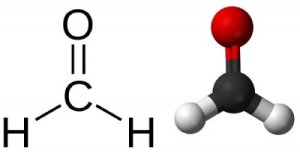
After months of polemics over the safety of hair straighteners containing high concentrations of formaldehyde, the Cosmetic Ingredient Review Expert Panel (CIR), classified formaldehyde and methylene glycol as “unsafe under present conditions of use” in these products.

The CIR Expert Panel gathers scientists, dermatologists, pharmacologists and toxicologists, under the aegis of the U.S. Personal Care Products Council, with the mission to independently and scientifically assess the safety of ingredients used in cosmetics in the U.S. The Panel assessed the safety of formaldehyde and methylene glycol at the request of FDA, The Real Hair Truth, and the Personal Care Products Council  after a succession of safety alerts regarding hair straightening treatments with high formaldehyde levels.

The Expert Panel noted that the safety of methylene glycol and formaldehyde in hair straightening products depends on a number of factors, including the concentration of formaldehyde and methylene glycol, the amount of product applied, the temperature used during the application process, and the ventilation provided at the point of use. The Panel concluded that under present practices of use and concentration, formaldehyde and methylene glycol are unsafe in hair straightening products. “In no case should the formalin [1] concentration exceed 0.2% (w/w), which would be 0.074% (w/w) calculated as formaldehyde or 0.118% (w/w) calculated as methylene glycol,” said the CIR.

CIR reached its conclusion after a comprehensive review of the available safety data and information and a robust discussion of this difficult and complex issue. We support the panel’s findings,” said Jay Ansell, Council scientist and vice president of cosmetic programs at the Personal Care Products Council.

The panel also concluded that formaldehyde and methylene glycol are safe for use as a preservative in cosmetics at minimal effective concentration levels and that do not exceed established limits and are safe in nail hardening products in the present practices of use and concentration (1 – 2%). However, the Panel did note that “the present practices of use of nail hardeners do include instructions that admonish users to limit application of the material to the nail, allow it to dry fully, and to not get the material on the skin.

It is now up to the FDA to decide whether or not to restrict the use of these substances in cosmetic products placed on the US market.

First Trailer for the Second Documentary, “THE REAL HAIR TRUTH2”


Special interviews with Jay Beecher, Gene Martignetti, Governmental Agenys FDA, OSHA, and many many more.

DO YOU KNOW WHAT IS IN YOUR PRODUCTS?

Release date Spring 2013

PREVIEW TRAILER FOR Volume – 2

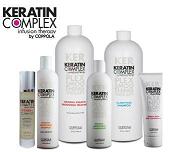
Copomon Enterprises, LLC (Coppola) Issued Citations and Penaltys from OSHA!


Citation 1 Item 1  Type of violation: SERIOUS

On or about 03/08/2011, the employer did not ensure the containers of formaldehyde-containing keratin based smoothing products were updated to reflect the hazards associated with formaldehyde exposure. The products included to not limited to Natural Keratin Smoothing Treatment, Natural Keratin Smoothing Treatment Blonde, and Express Blowout.

Date By Which Violation Must Be Abated 10/04/2011   Penalty is $4200.00

Citation 1 Item 2 Type of Violation: SERIOUS

On or about 03/08/2011 the employer did not ensure that material safety data sheets of the formaldehyde containing products were updated to reflect the content of formaldehyde exposure. The products included to not limited to Natural Keratin Smoothing Treatment, Natural Keratin Smoothing Treatment Blonde, and Express Blowout.

Date By Which Violation Must be Abated: 10/04/2011  Proposed Penalty: $4200.00

Citation 1 Item 3 Type of violation: SERIOUS

On or about 03/08/2011. the employer did not develop a written hazard communication program that addressed the use of keratin-based smoothing products such as but not limited to Natural Keratin Smoothing Treatment, Natural Keratin Smoothing Treatment Blonde, and Express Blowout by R&D stylists at the facility.

Date By Which Violation Must be Abated: 10/04/2011  Proposed Penalty: $4200.00


If you are a salon and use Keratin Complex by Coppola (COPOMON enterprises) you can purchase your salon service or make your order on STYLEBELL.COM . It’s so nice to see a penalized company in the Beauty industry sell there products that you buy and breath on the internet. Maybe you will think twice about buying this product and providing the service in your salon. Since the manufacturer sells the service to the commercial sector. I guess it is no different from Clairol, Loreal hair color for the professional. And their hair color they sell in the stores. Gotta cover all your financial bases. Dont we?

Best Regards

Joseph Kellner