Sephora Disputes “Misleading” Allegations in Clean Beauty Lawsuit

On March 2, 2023, Sephora filed its reply in support of its motion to dismiss proposed class action claims that its “Clean at Sephora” program was false and misleading, disputing allegations that a significant portion of relevant, reasonable consumers were or could be misled about what ‘Clean at Sephora’ means, and that the ingredients permitted by Sephora’s program were potentially harmful to humans.

Sephora’s reply (presumably) concludes preliminary briefing in what has become a closely-watched lawsuit in the beauty and wellness industry over the meaning of the term “clean beauty.” Absent clear regulatory guidance from the FDA and the FTC, companies’ claims involving the terms “clean,” “natural,” “nontoxic,” or “organic” have been scrutinized in social media, and by an increasingly active and organized plaintiffs’ bar.

While it remains to be seen how the court will decide the “Clean at Sephora” case, companies should continue expect more litigation in this area, as what it means for beauty products to be clean, natural, nontoxic, or safe, remains the subject of intense debate.

As explained in our previous publications (here, here, and here), the market for clean beauty is expected to reach an estimated $11.6 billion by 2027. But absent clear regulatory guidance about what it means for beauty products to be “clean,” “natural,” “nontoxic,” or “safe, promoting products as “clean” can carry significant regulatory risks, and leaves the industry ripe for class action litigation.

Sephora launched its “Clean at Sephora” program in 2018. To qualify for inclusion in the program, which spans across various product categories, products must be formulated without certain common cosmetic ingredients—such as parabens, sulfates SLS and SLES, phthalates, formaldehyde and more—that are linked to possible human health concerns.

On November 22, 2023, Plaintiff Lindsay Finster filed a proposed class action lawsuit in the U.S. District Court for the Northern District of New York, alleging that products advertised as part of the “Clean at Sephora” program contain ingredients that are “inconsistent with how consumers understand” the term “clean.”

According to plaintiff, consumers understand the definition of “clean” beauty to mean the dictionary’s definition of “clean”: “free from impurities, or unnecessary and harmful components, and pure.” Thus, to be considered “clean” in the context of beauty, plaintiff alleged that products should be “made without synthetic chemicals and ingredients that could harm the body, skin or environment.” But, as plaintiff contended, “a significant percentage of products with the ‘Clean at Sephora’ [seal] contain ingredients inconsistent with how consumers understand the term.” Consequently, plaintiff alleged that the “Clean at Sephora” program “misleads consumers into believing that the products being sold are “natural,” and “not synthetic” and to paying a price premium based on this understanding.”

Plaintiffs alleged potential class action violations of §§ 349 and 350 of New York’s General Business Law (“NY GBL”), as well as multi-state consumer protection statutes, and breach of express and implied warranty, the Magnuson Moss Warranty Act, fraud, and unjust enrichment claims.

On February 2, 2023, Sephora moved to dismiss plaintiff’s complaint, arguing that “[i]t is not plausible that reasonable consumers are or could be confused by the ‘Clean at Sephora’ program” for several reasons.

First, Sephora argued that plaintiff relied on unsupported and conclusory allegations about consumers understanding of the word “clean.” While plaintiff argued that consumers understood the definition of “clean” beauty to mean the products made without synthetic chemicals and or potentially harmful ingredients, Sephora countered that plaintiff failed to plead any facts showing that a significant portion of relevant reasonable consumers could be misled by Sephora’s claims into believing that the “Clean at Sephora” program consisted of only natural products and ingredients. As Sephora noted, words like “natural,” “organic,” and the like never appeared on the label or elsewhere. Instead, plaintiff relied upon “on selectively quoted blog posts and webpages from small businesses, which not only lack reliability and authority but are presented without evidence that any significant number of consumers have even read them, let alone agreed with them.”

Second, Sephora argued that plaintiff mischaracterized Sephora’s representations as being about the kinds of ingredients included in the program, rather than excluded. Thus, plaintiff was attempting to turn “Clean at Sephora” into “Natural at Sephora”—claims that Sephora did not make. On the contrary, Sephora’s marketing for the program focused on the exclusion of certain ingredients linked to potential human health outcomes. Because Sephora made no representations about the products or ingredients included, it argued that it could not mislead consumers about the safety of included products or ingredients in the program. Moreover, plaintiff failed to plausibly allege that any of the ingredients included in the program were potentially harmful, relying instead on a series of unattributed and unsubstantiated blog posts.”

Finally, Sephora rejected plaintiff’s contention that it forced consumers to scrutinize product lists in contradiction of the Second Circuit’s 2018 decision in Mantikas v. Kellogg, which prohibits the use of ingredient lists on the side of packaging to clarify otherwise misleading presentations where plaintiff failed to identify any misleading conduct by Sephora.

Sephora also rejected plaintiff’s efforts to seek relief under other unspecified consumer protection statutes, arguing that plaintiff failed to plead how the unspecified consumer protection statutes were similar to the NY GBL, and disputed plaintiff’s breach of warranty, consumer fraud, and unjust enrichment claims as duplicative of plaintiff’s NY GBL claims, or otherwise contingent on the same erroneous premise—that the ‘Clean at Sephora’ label is misleading—and thus, equally deficient.

In opposition to Sephora’s motion to dismiss, plaintiff reiterated that it was sufficiently plausible that reasonable consumers would perceive the “Clean at Sephora” as excluding synthetic ingredients, and that “Clean at Sephora” meant free from potentially harmful ingredients. Plaintiff further contended that resolution of her multi-state claims was not ripe until the class certification stage, and that Sephora’s advertising campaign created an express warranty that “Clean at Sephora” products were formulated without potentially harmful ingredients.

In its reply, Sephora argued that reasonable consumers could not interpret the phrase “Clean at Sephora” as limited to only “natural” ingredients when Sephora “prominently explains, in plain terms, exactly what it means by the phrase: ‘formulated without parabens, sulfates sodium lauryl sulfate (SLS) and sodium laureth sulfate (SLES), phthalates, mineral oils, formaldehyde, and more.’” Sephora also refuted plaintiff’s efforts to characterize the program’s inclusion of the phrase “and more” into an impression that synthetic ingredients were excluded along with the listed ingredients, noting that plaintiff alleged no facts to support her contention that reasonable consumers shared that impression.

Finally, Sephora rejected what it described as plaintiff’s efforts to conflate the meaning of the word “clean” with “non-synthetic” or “natural,” or otherwise assert that because products are not “natural,” they were not safe, noting that not all synthetic ingredients were unsafe, while not all natural ingredients were safe.
MORE TO COME

JCPenney Is Closing Store’s

J.C. Penney continues to shrink as it tries to beat a path out of bankruptcy. The retailer is in Chapter 11 in part because of a huge lack of sales. A sign that the company was out-sized relative to a diminished customer base.

Following a comprehensive review of our retail footprint, JCPenney made the difficult decision to announce over 150 store closures. Liquidation sales at most closing store locations are now underway. In a hearing this week, an attorney for the retailer said that vendors are holding back inventory as they wait for a deal to be signed and closed.

JCPenney is trying to move forward on its proposed deal to sell its department store operations to Simon Property Group and Brookfield Property Partners.

Sephora inside JCPenney is closed in liquidating stores. Sephora items purchased prior to Friday, June 12, 2020, may be returned throughout the entire liquidation sale at most closing stores. Dates may vary by location. Contact your local store for more details.

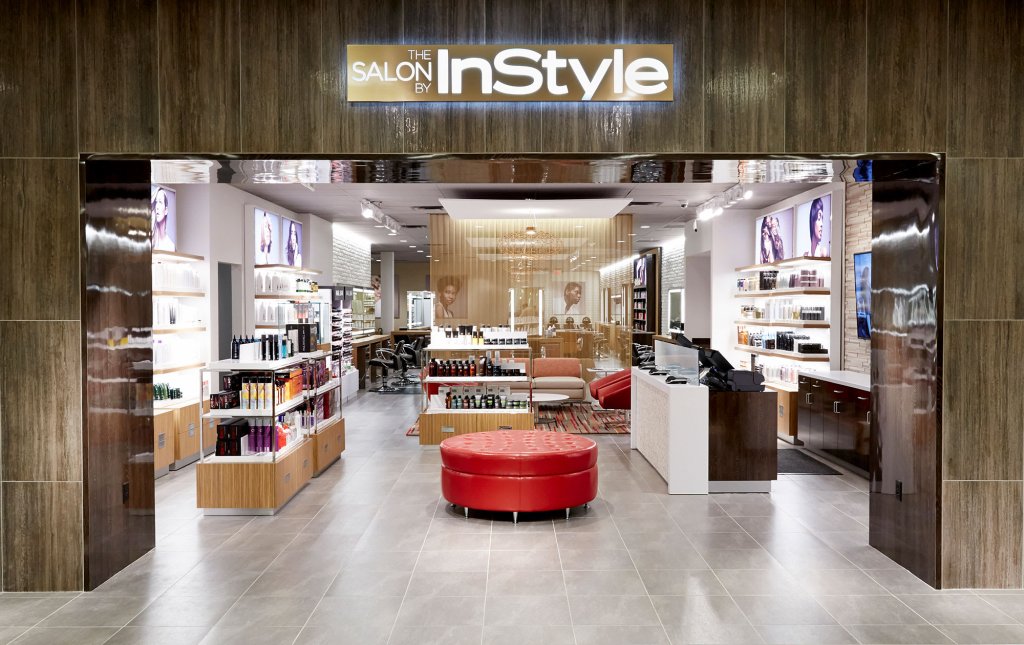
Most hair salons in closing stores will operate through mid-August, yet this is subject to change on a location-by-location basis. The company spent so much time over the past 10 years “re-branding” itself that it forgot about the most important piece…It’s associates working in the stores and the customers shopping in it. Sad state of affairs.

Their is zero support of managers from upper management. Your job security is based on weather or not the upper management likes you and when you ask for guidance you are basically told to figure it out yourself.

This company talks about training and promoting within the company. They will go outside the company to hire for a job that use associates within the salon. Very poor company on promoting the associates. Sad state of affairs for loyal employee’s of this company. But you will find out in the beauty industry it is all over like a virus, the way employee’s are taken advantage of. No benefits, lack of a living wage, no insurance etc. I hope they all find good employment.

Employee Lawsuit brought against Sephora for unpaid wages

Sephora is at the centre of an Employee Lawsuit after workers accused the retailer of failing to adequately compensate them for time spent going through security and applying make-up before a shift.

The lawsuit was brought against it in the Superior Court of California, County of San Francisco, with a team of attorneys representing around 8,000 Sephora workers. The employees are asking the judge to grant class certification for the wage-and-hour lawsuit, according to a report by Top Class Actions.

However, despite Judge Karnow raising concerns that lack of solid evidence of the unpaid time spent in work could lead to liability issues, attorneys on the Sephora employee lawsuit countered that this lack of time logging was due to Sephora, which had a ‘duty to track’.

An attorney allegedly stated, “As far as liability goes, a lot of the claims involve time. You can’t allow an employer to avoid paying employees by virtue of the fact it didn’t track its time. That means an employee cannot prove his or her damages. If they had tracked time, we wouldn’t be having this conversation.”

Sephora workers were said to have provided evidence that they are expected to wear and maintain their make up as part of their duties, while the lawsuit also alleged the retailer failed to provide ample rest and meal breaks.

The beauty retailer is said to have started compensating workers an extra three minutes for security bag checks, a move that attorneys argue is an acknowledgement by Sephora that it had been failing to do this previously.

How Beauty Products Are Sold: Part One

Customers don’t know very much about how beauty retailers sell them products. The process by which a lipstick goes from factory to store to you is pretty opaque. Sure, we know conceptually that beauty has high margins and a big markup. But while newer brands like The Ordinary and Beauty Pie have started to offer a bit of transparency into pricing and how brands are ultimately made available to consumers, there is still a lot of mystery baked into the process.

The recent apparent shuttering of an indie beauty brand and its lawsuit against Sephora helps shed some light on how truly complex it is to sell beauty products — and the costs that get passed on to shoppers.

A few weeks ago, the beloved indie makeup brand Obsessive Compulsive Cosmetics (OCC) abruptly shuttered its website, its New York City store, and all its social media accounts. While the brand has not made any official statement and none of its third-party retailers like Nordstrom and Urban Outfitters have confirmed anything, it’s widely assumed that the brand has gone out of business. Founder David Klasfeld seems to have started a new Instagram account under the handle @dkwmakeup, and notes in the bio: “I founded and ran the world’s first 100% Vegan & Cruelty-Free Cosmetics line from 2004-2018.” (Racked has reached out again to OCC and will update if we hear back.)

If this is the case, what happened? The only person who knows for sure at this point is the founder of OCC, but a lawsuit with Sephora dating back to 2015, may provide some clues. It also sheds some light on things like who actually is responsible for building and filling the product testing fixtures you find in stores, what large markdowns mean for a brand, and how store exclusivity works.

There are two legal documents publicly accessible, one from 2015, first published by blogger Zadidoll, and one from 2016. These provide an incomplete record of the full proceedings, and it’s unclear if Sephora and OCC settled this case or what the final outcome was. But what is clear is that retailers hold a lot of the cards and OCC probably lost a lot of money. A representative for Sephora sent the following statement to Racked: “Per company policy, we do not comment on pending litigation.

The terms of a Sephora contract

According to the 2016 order, OCC and Sephora signed a contract in 2012 stating that the retailer would sell the brand’s products and that OCC would be 100 percent responsible for the costs of the fixtures, which is the system of shelving and pigeonholes where testers and products for sale are displayed in the store. They can vary in size from a small box on a shelf to an aisle-long behemoth. Per industry sources, this is a pretty common arrangement. (More on what those fixtures cost in a bit. Hint: a lot.)  OCC then alleged in the suit that it entered into a verbal agreement with Sephora to alter the original contract in two ways: first, that Sephora would become OCC’s exclusive brick-and-mortar retailer with the understanding that it would place enough orders to make up for the ones OCC would have to decline from other retailers. Second, Sephora was supposedly going to help defray the costs of the fixtures by contributing 50 percent, since it supposedly wanted to increase the number of stores selling OCC, which would then necessitate building more fixtures. OCC alleged in the suit that Sephora reneged on these oral agreements by not placing more orders and not helping to pay for fixtures. Sephora argued that it was a moot point because the original contract stipulated that the contract could only be modified in writing and therefore the suit should be thrown out.

However, the judge ruled that OCC could continue pursuing it, because he determined that OCC had acted in such a way (turning down orders from other retailers, for example) that made it seem clear that OCC relied on Sephora’s verbal statements. (He threw out a fraud allegation that OCC made about Sephora, however.) Sephora was given 20 days to serve an answer, but the conclusion or settlement does not appear to have been made public.

But that’s not the full story. An earlier 2015 order details exactly how much money OCC stood to lose in the Sephora deal. Sephora wrote a letter to OCC to terminate the deal in 2015, stating it would sell the products it had until a certain date, while also requesting OCC to fulfill two outstanding purchase orders that OCC hadn’t shipped yet. After the date in the termination letter, Sephora expected OCC to take back leftover product (this is called a return-to-vendor, or RTV, clause) and reimburse Sephora for the unsold product. The bottom line? Sephora said it expected to be reimbursed $832,700 for the unsold products. Otherwise, it allegedly said it would liquidate its remaining stock at fire-sale prices. OCC asked for a preliminary injunction, arguing that “if provisional relief is not granted it will suffer irreparable harm because an immediate mark down of the outstanding inventory would have financially devastating effects and moot any award of damages.” According to the lawsuit, OCC never reimbursed Sephora for remaining stock, and Sephora did end up marking down the remaining products and selling them off quickly, according to Revelist. Ultimately, OCC claimed damages of $521,647.20. This is where the paper trail ends.

PART TWO COMING NEXT WEEK

Take Action To Clean Up The Beauty Aisle!


Dear friends

When we buy products that we put on our skin, faces and hair, we rightfully expect that they are free of toxic chemicals that increase our risk of breast cancer or  reproductive health problems. But think again.

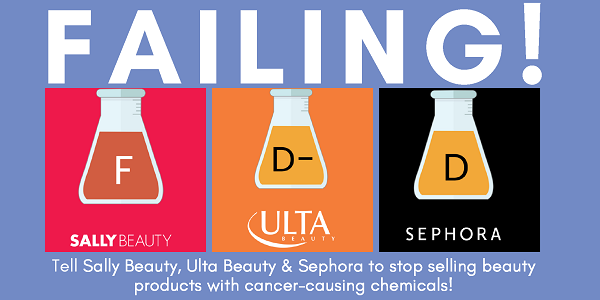
A recent report card from our partners at Mind the Store shows that retailers Sally Beauty, Ulta Beauty, and Sephora, are failing to address cancer-causing chemicals in the cosmetic and personal care products they sell. Take action to clean up the beauty aisle!

Companies can and should make safer products, sell safer products, and make ingredient transparency a priority. Following pressure from consumers like you, companies like Target, Walmart, CVS Health, and Costco announced policies to get toxic chemicals off their store shelves last year.

Tell these beauty retailers to get their act together!

As more and more families are devastated by a cancer diagnosis, it’s more important than ever to focus on prevention. That’s why we believe – and think you do too – that chemicals that can cause cancer have no place in the products we use to clean and care for our bodies.

Please take action to tell these retailers to stop selling beauty products made with toxic chemicals. Because body care products shouldn’t cost us our health!

Thank you for your own good work on this issue,

Janet

Janet Nudelman
Director of Program & Policy, Breast Cancer Prevention Partners
Director, Campaign for Safe Cosmetics 415-321-2902 (direct)

P.S. Donate HERE to support our work to hold beauty retailers and other corporations accountable for product safety and transparency.