7 Ways The Beauty Industry Convinced Women That They Weren’t Good Enough

Jotovi Designs Inc

In America, the perennial quest for beauty is an expensive one.

Every year, women spend billions of dollars in exchange for beautiful hair, lovely lashes, and smooth and silky skin. Still, many of our culture’s most common beauty procedures were virtually nonexistent a century ago. The truth is, many of our expectations of feminine beauty were shaped in large part by modern advertisers. We’ve tracked the history behind some of the most common “flaws” that besiege the modern woman and the surprising stories behind their “cures.”

1. “Your natural hair color isn’t pretty enough.”

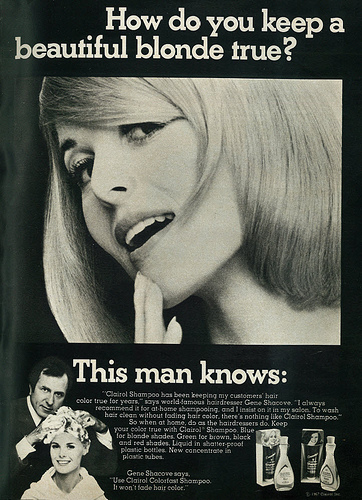
“Does she or doesn’t she?” asked the Clairol’s ad that launched a million home hair dye jobs. Indeed, the aggressive Clairol Marketing would trigger an explosion in sales. In the process, the percentage of women dyeing their hair would skyrocket from 7 percent to more than 40 percent in the ’70s.

The ads showed everyday women reaping the benefits of more lustrous hair, a luxury that had long been exclusive to glamorous supermodels with professional dye jobs. The ads proclaimed, “If I have only one life, let me live it as a blonde.” Indeed, Clairol peddled the perfect yellow shade of the dye as a way to transform your life:

realhairtruth.com

Clairol hair dye offered self reinvention, in 20 minutes flat, particularly for women who didn’t want to reveal their true age or grey roots.

realhairtruth.com

Shirley Polykoff, the advertising writer behind Clairol’s goldmine campaign, described her plan as such: “For big success, we’d have to expand the market to gather in all those ladies who had become stoically resigned to [their gray hair]. This could only be accomplished by reawakening whatever dissatisfaction’s they may have had when they first spotted it.” Clairol did that with ads like, “How long has it been since your husband asked you out to dinner?” Nowadays, about 90 million women in the U.S. color their hair.


Retail Regulation In The Cosmetic Industry

real hair truth
The $71 billion personal care product industry in the United States is largely unregulated, and retailers are stepping up to fill the void.

When retailers adopt policies on the safety of the products they sell, it’s called retail regulation.

There is a rich history of retailers using their purchasing power to effect positive market change.
In 2008, when Walmart—the world’s largest retailer—agreed to stop selling baby bottles, sippy cups and sports water bottles made with BPA, it forced manufacturers to reformulate in order to keep selling to this retail giant.
More and more retailers are adopting store wide policies governing the safety of their beauty products, with Whole Foods leading the way by implementing a basic chemical safety screening for all its personal care products and adopting a restricted-substances list made up of more than 400 chemicals prohibited from products bearing its premium standards labels.
In 2008 CVS stepped up to the plate by adopting a store-wide policy prohibiting the use of certain
toxic chemicals in their store-brand baby products. Walgreen’s and Target followed suit in 2013 by
announcing they would develop and adopt comprehensive cosmetic safety policies to govern the
safety of the private-label and national brands they carry.
The following goals should guide retailers’ policies and practices to improve the safety of personal
care products sold in their stores:
Expand the sale of safer cosmetics and personal care products (products free of chemicals
linked to cancer, birth defects, developmental harm and other health concerns).
Adopt a list of chemicals that are banned from use in private-label and national brands sold
in their stores, and ensure that toxic chemicals are replaced with safer alternatives.
Reformulate private-label products to eliminate chemicals of concern.
Practice the highest level of transparency by sharing the company’s safe-cosmetics policy,
practices and progress on websites and in corporate responsibility reports.
Strive for continuous improvements in policies and practices by monitoring scientific
research regarding emerging chemicals of concern.
Federal Regulations
Major loopholes in federal law allow the cosmetics industry to put virtually any chemical into a
cosmetic or personal care product with no pre-market FDA safety testing or review, no monitoring
of health effects, and inadequate labeling requirements. Most of us assume the FDA regulates
these products just as it does food and drugs to assure safety. In fact, cosmetics are one of the least
regulated consumer products available to the public. To make matters worse, contaminants in a
finished cosmetic product that occur as by-products of the manufacturing process, by law, don’t
have to be listed on the product label. That means chemicals like PFOA can hide in a cosmetic or
personal care product without consumers knowing.
The Federal Food, Drug and Cosmetics Act (FFDCA) includes 112 pages of standards for food and
drugs, but just a single page for cosmetics. The cosmetics title of the FFDCA, which has not been
amended significantly since it was enacted more than 77 years ago, provides virtually no power to
perform even the most rudimentary functions to ensure product safety in an estimated $71 billion
cosmetic industry.
Fortunately, for the first time in 77 years, Congress could close the gaping holes in our outdated
federal law and give the FDA the statutory authority and resources it needs to effectively regulate
the safety of cosmetics and personal care products. Currently, Congress is considering two bills to
regulate cosmetics ingredients.
The Senate
On April 20, 2015, Senators Dianne Feinstein (D-CA) and Susan Collins (R-ME) introduced the
Personal Care Products Safety Act of 2015, an important bill with the potential to give the cosmetics
industry a desperately needed makeover. Many strong provisions in the bill would advance the
FDA’s ability to protect consumers from unsafe chemicals in cosmetics and personal care products:
Requiring companies to register their facilities, products and ingredients with the FDA;
Closing labeling loopholes by requiring full ingredient disclosure for professional salon
products and web-based sales of cosmetic products; and
Directing the FDA to assess the safety of a minimum of five cosmetics chemicals a year.
However, the bill falls short of what is needed. Ideally, federal regulation would put in place a robust
safety standard and elevate the rigor of ingredient safety reviews by the FDA and manufacturers to
ensure that cosmetics and personal care products are as safe as possible
Coty Will Acquire Procter & Gamble’s Beauty Brands

The Real Hair Truth

Coty Will Acquire Procter & Gamble’s Beauty Brands

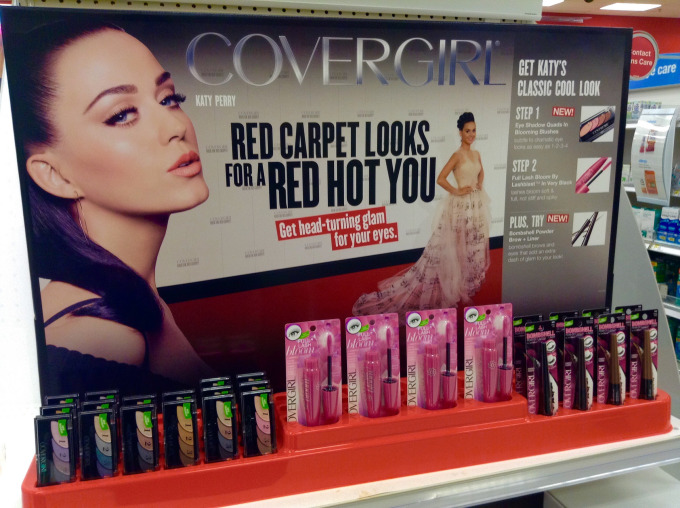
Procter & Gamble has been looking to streamline its massive portfolio of brands, looking to sell, spin off, or shut down the majority of them. Last night, the unofficial news came out that many of the company’s beauty brands sold to competitor Coty, which means that Cover Girl and Clairol will be run by another drugstore cosmetics veteran.

Coty may not be a name that you recognize, but the cosmetics conglomerate owns a wide variety of brands: they sell branded fragrances for everyone from Beyoncé to Playboy to Vespa (yes, the scooter company). Their best-known brand is probably nail care products sold under the name Sally Hansen (who was not a real person) but they also own higher-prestige brands like OPI (nail care) and Philosophy (skin care).

Coty isn’t in the hair care business, so acquiring hair color brands like Clairol and Wella would introduce them to a new market. They are, however, already selling products to salons: OPI sells nail polishes and supplies to pros as well as directly to consumers.

The Cleveland Plain Dealer estimates that the acquisition would double Coty’s annual sales. The brands included in the deal are Cover Girl, Max Factor (which remains popular in Europe, but is no longer sold here) and the two hair color brands, Clairol and Wella. P&G would hold on to its brands that revolve around soap and shampoo, like Aussie, Old Spice, and Pantene.

There are other bidders in the mix, including private-equity firms and other soap companies, so this deal isn’t finalized yet. Some sources are also reporting that Coty won the bid for Procter & Gamble’s fragrance brands.

Revlon has reached a settlement!

Real Hair Truth.com

Former employee had said the cosmetic company’s CEO had made made derogatory statements about Jews, Americans and blacks.

Revlon Inc has reached a settlement with a former chief scientific officer whose claims the company’s chief executive made derogatory statements about Jews, Americans and black people went viral on social media.

The settlement with Alan Meyers was disclosed in papers filed in Manhattan federal court on Monday. The terms were not disclosed.

Revlon said in a statement that the case was “amicably resolved.” Meyers’ lawyer did not immediately respond to a request for comment.

Meyers, who joined Revlon in 2010 and was fired in December last year, sued Revlon for retaliation and discrimination.

He claimed in the lawsuit that Chief Executive Officer Lorenzo Delpani accused him of raising “ghost” safety problems at recently acquired laboratories.

Meyers also said the Italian-born Delpani, who was not a defendant in the lawsuit, frequently yelled at him in front of other executives, and made anti-Semitic and anti-American comm.

The claims became a trending topic on Twitter in January via the hashtag #ShadesOfRevlon.

In the lawsuit, Meyers said Delpani referred to Americans as “dirty” and, during a visit to a South African factory, said he could smell black people when they entered the room.

Meyers also alleged Delpani expressed surprise at the lack of Jewish executives at Revlon because “Jews stick together.”

Revlon has called the lawsuit “completely merit less” and said Meyers “repeatedly demonstrated critical lapses in judgment and failed to perform at the high standard we demand of our employees.”

Meyers also claimed Delpani mentioned Ronald Perelman, who is Revlon’s billionaire controlling shareholder and Jewish, when he made the allegedly derogatory comments, the lawsuit said.

As the lawsuit found an audience on Twitter, Perelman, issued a statement supporting Delpani, calling the allegations “absurd and offensive” and saying Delpani was one of the “least bigoted or biased” people he had ever known.

The case is Meyers v. Revlon Inc, U.S. District Court, Southern District of New York. No. 14-10213.

REAL HAIR TRUTH


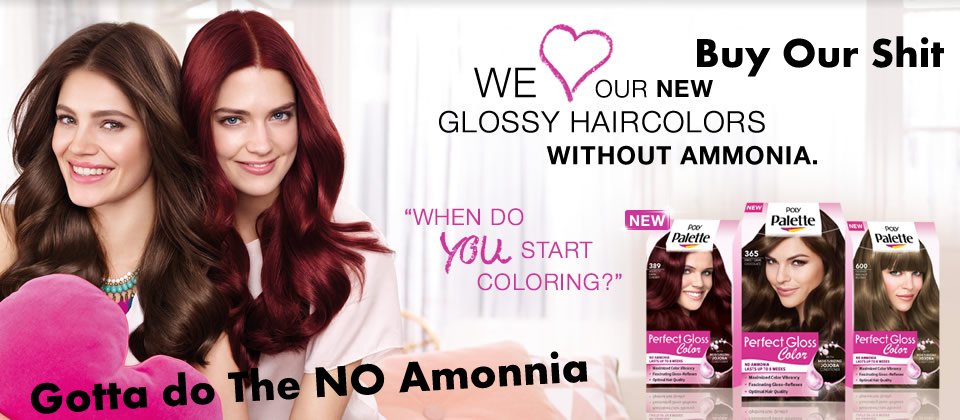
Palette Perfect Care Color By Schwarzkopf Sells out the Beauty Industry Professional!

Real Hair Truth/ Joseph KellnerAlright here comes another company selling out the professional cosmetologist! Schwarzkopf Hair Color. Gone are the days of loyalty, and contracts. Now another major hair color line has made a product for home hair coloring services. Yes, just do it yourself. No need to pay a 30-40 year professional in the industry the salon price, just buy it from the manufacturer who distributes to the professional. Money, Money, Money that’s what it all comes down too. So if all your life you have been going to a salon for that perfect hair color, and your house went up in foreclosure, your husband divorced you, or you are now working two jobs Palette Perfect Care Color is hear to help you! A sharp recession that pretty much devastated the Beauty Industry almost ten years ago has another sword in the back. But what I find interesting is there are so many young professionals in the industry willing to work for a dozen or so tubes of hair color and stand on a stage to sell the shit!  Remarkable, just remarkable. To be in a industry where you are in complete competition with the manufacturer, and they have no regard for you. And you helped make there company. Amazing. Simply amazing. But that won’t stop tomorrow, the young professional now, I declare knows no difference from a bobby pin and a hair pin. They will keep buying the crap now and latter they will suffer there loses. Schwarzkopf Palette Perfect Care Color.

RealHairTruth


The big conglomerate that owns Schwarzkopf is Henkel, Founded in 1876, Henkel is a global leader in the consumer and industrial businesses with brands such as Persil, Schwarzkopf and Loctite. Headquartered in Dusseldorf, Germany, Henkel employs about 47,000 people worldwide and the company’s preferred shares are listed in the German stock index DAX.


Real Hair Truth/Joseph KellnerGotta have the No Ammonia! My Dear Lord Help Us All!

Real Hair Truth/Joseph KellnerAnd for all you scum bags who like to stand on a stage and have your ego’s filled make sure you tell the audience to buy the product on EBAY!

Real Hair TruthBuy Now On Stucco

Maybe the PBA or Hairbrainned can help us all!

LOLOLOLOLLOLOLOLOLO

RealHairTruth.comBuy Now On BuyCheapr.com

And the list go’s on and on and on.

What a lovely Industry it is!

Lololololollol