Bargain stores are known for selling name-brand beauty products for a fraction of the original price. But what if our pursuit of a bargain comes at a much higher cost than we thought? Allegedly, it’s believed that these stores don’t trash out these used items. But instead, they just put it back on the shelf for the next customer to purchase. A customer told me, she bought three “untouched” beauty products—two Sephora eye shadow palettes and Truly Beauty’s Moon Jelly face mask—tampered with them at home, then attempted to return the items to see if the store would resell them.
In the interview she told me that when she walked up there, and I told them that I wanted to buy these items, I asked the [store assistant] if it was OK to return these items,” Natalia said. “And she said that I can return these items as long as they’re untouched, that I can open them, look at them, but I can’t touch them. And I have 30 days to return them.” Cool she thought to herself. But here is the kicker in this whole revelation.
When it came to returning the tampered products, Natalia claimed that while the shop assistant “went to look at the items,” they “[gave] up halfway and [didn’t] even bother looking at the items.” “She [didn’t] even open them,” Natalia added. “Just put them to the side and [gave] me my money.” The next day, Natalia filmed herself returning to the store and found all three items back on the shelf. Upon inspection, she confirmed that the items on the shelves were the exact same ones she returned. Sad isn’t it everyone. And this happens a lot at other department stores, so check you products before purchasing them. Sanitation is a must when applying makeup to the skin.
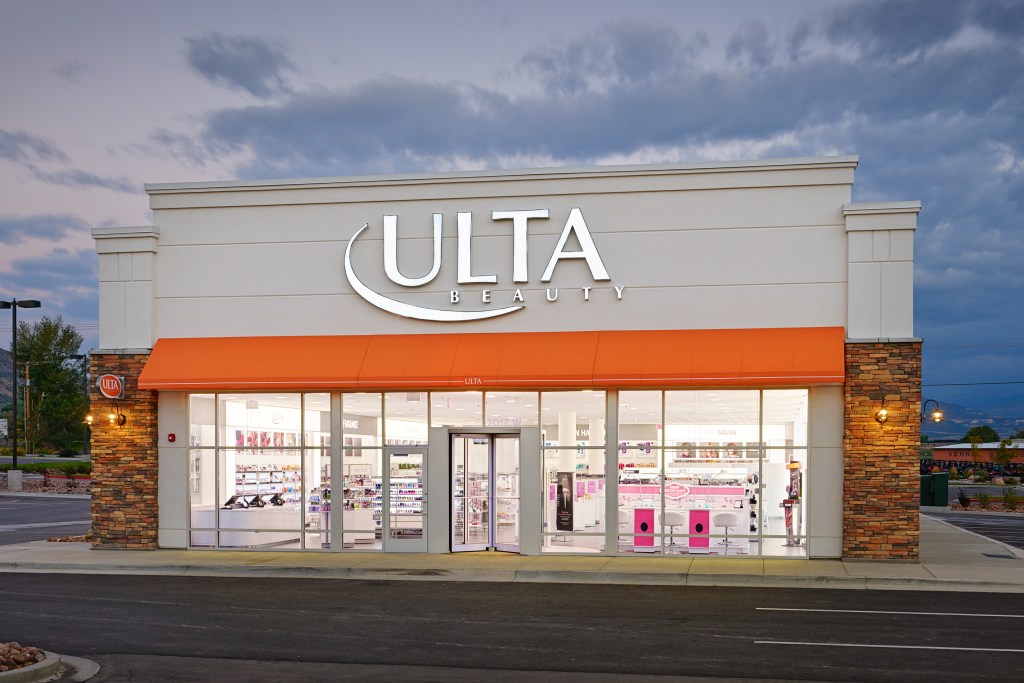
Ulta Beauty laid off employees at its corporate headquarters and among its field management team yesterday as it works to reshape itself amid the ongoing pandemic. Spokeswoman Eileen Ziesemer declined to comment on the number of employees that were laid off but confirmed their last day was Jan. 12.
“While incredibly difficult, these decisions were made thoughtfully with a focus on resetting our corporate cost structure to operate more effectively and efficiently in the short-term as well as optimizing our enterprise capabilities to thrive in the long-term,” Ziesemer said in an email. “The associates leaving Ulta Beauty were of course treated with respect, compassion and support.” The layoffs hit roles across all corporate functions of the Chicago-area-based beauty chain, Ziesemer said.
It also eliminated open roles and reorganized some teams. She said the move expanded certain positions and “introduced a small number” of roles in investment areas. Like many retailers, Ulta has faced struggles during the pandemic. It closed its stores for seven or eight weeks during the shutdowns last spring, closed 19 stores permanently in the third quarter, and has eliminated jobs.
Makeup in particular has been a tricky category during the pandemic. Without excuses to leave the house, many have forgone wearing makeup for months. There are some bright spots, such as above-the-mask eye makeup, and pampering items, such as candles and bath products, executives said on Ulta’s earnings call last month. The shutdowns also drove traffic online. Ulta has 1,262 stores in the U.S., Ziesemer says. The company was founded in 1990. The company most recently reported its employment count before the pandemic. As of last February, Ulta employed about 18,000 full-time and 26,000 part-time workers, according to a filing with the Securities & Exchange Commission from last March. Ziesemer said the total number of corporate associates laid off yesterday was a “meaningful, but relatively small number of our total associates.”
The “clean” beauty movement is picking up steam. Health-conscious consumers are paying more attention to ingredients applied to their bodies and are looking for products made without harmful chemicals. In response to the demand, some popular cosmetics companies are now offering so-called, “clean” beauty lines. Companies considering joining this trend should take into account the substantial legal risks.
A look at the food industry’s use of the adjectives like “natural”, “clean”, “simple,” and “wholesome” illustrates the kinds of risks the beauty industry may face. When consumers began paying more attention to ingredients, companies began marketing their products with these health driven adjectives. However, this led to a barrage of class action lawsuits for false advertising under state consumer protection laws as plaintiffs lawyers argued that the claims made on the front of the label did not match the ingredients on the back of the label.
The food industry started to use the word “clean” after the use of “natural” resulted in a barrage of consumer lawsuits. As it turned out, however, the alternative claim also resulted in consumer class action lawsuits. The theory behind these suits is that “clean” is just a synonym of “all-natural” and signifies to consumers the absence of any synthetic chemicals. Similarly, it is argued that “wholesome” and “simple” are misleading consumers as to the real nutritional value of food products. This is at best an idiosyncratic view, not backed by legitimate consumer evidence. However, merely making the allegation is sometimes sufficient to survive a motion to dismiss, where the court must consider whether “no reasonable consumer” could share the plaintiff’s alleged interpretation.
Adding to the complexity is the difficulty of placing a sufficiently prominent and clear explanation, or definition, for such adjectives in an unavoidable location where the plaintiff cannot reasonably allege she failed to notice it. Courts have sometimes held that consumers need not be expected to turn around the bottle or package to read textual information on the back label before purchase.
We have seen false advertising claims creeping into the skincare industry as well, and this, coupled with the history of the food industry, should put the beauty industry on notice of the legal risks. For example, just last month, a lawsuit was filed in California State Court against the makers of Coppertone sunscreen. Prescott, et al. v. Bayer Healthcare Pharmaceuticals Inc.,et al., No. 5:20-cv-00102 (N.D. Cal. filed Jan. 3, 2020). The suit alleges that Coppertone deceived consumers by labeling certain sunscreens as “mineral-based” when in fact chemicals make up a significant portion of its active ingredients. The plaintiff’s theory is that the headline “mineral-based” claim suggests to consumers that the product protects skin from sun damage exclusively with minerals.
In the “all-or-nothing” world of the plaintiffs’ lawyers, any ingredient call-out or characterization creates legal peril by negative implication. If the label says “clean,” the product can contain no synthetic substances. If the label says “plant-based,” the product should not have any synthetic or animal components – even if trivial in amount. Plaintiffs are routinely sending products to labs for rote chromatographic analysis, and the tiniest detectable amounts of disfavored chemicals can trigger lawsuits. In California, the consumer protection laws include California’s Unfair Competition Law, False Advertising law, and the Consumer Remedies Act. Companies making sales in California also need to be mindful of Proposition 65 which requires warning labels on products that contain any enumerated chemicals identified by the State to cause cancer, birth defects, or reproductive harm.
Since there are no regulations mandating the definition of such descriptive terms on cosmetic labels, these definitions (e.g., “clean”) can vary from company to company. The beauty industry should heed caution when using “clean” beauty claims. In order to avoid consumer confusion— and ultimately litigation— companies should define “clean” in a way that they can, and do, meet, and that definition should be available at the point of sale.
For years, Minnesotan beauticians have styled hair and applied makeup at weddings, proms, and other major social gatherings where people want to look their finest. But now a crackdown threatens to throw about 1,000 hair and makeup artists out of business.
Last December, the Minnesota Board of Cosmetologist Examiners declared that applying makeup at special events could only be done by licensed salon managers, a credential that can take over 4,000 hours of training. To enforce its rules, the Board has ordered makeup artists to cease and desist and slapped them with thousands of dollars in fines. Violating the law can even risk criminal penalties. Yet the law is filled with loopholes. The Board doesn’t require a license to offer hair or makeup services for fashion, film, media productions, photo-shoots, TV, or the theater. (Selling makeup at retail counters is also exempt.)
Minnesota’s regulations are not just ridiculous, they’re also unconstitutional. Last month, several hair and makeup artists, along with a Minneapolis-based makeup artistry school, filed a lawsuit against the Minnesota Board of Cosmetologist Examiners. (The Board has declined to publicly comment on the case.) Typically, advocates for occupational licensing claim it’s necessary to protect the public’s health and safety. But that’s hardly an issue with hair and makeup artists, since they use beauty tools found in almost any American’s home, like blow dryers, brushes, and combs. It doesn’t take thousands of hours to learn how to wash your hands and clean your tools. Moreover, as the artists’ lawsuit argues, “any legitimate government interest defendants may have in protecting public health and safety is wholly undermined by their broad exemptions for services. Doing hair and makeup for photo-shoots and media appearances is unregulated, while offering the exact same services at a wedding or other special event is illegal unless the artist has completed thousands of hours of useless training, a distinction that is “manifestly arbitrary and fanciful.”
Since “there is no natural and reasonable basis” to license makeup and hair services for brides, but not bridal photo-shoots, Minnesota’s wildly unequal treatment infringes on the Equal Protection Clauses of both the U.S. and Minnesota Constitutions. Make no mistake: The state’s licensing requirements are incredibly onerous. Before they can legally work at special events in Minnesota, makeup artists need at least 3,300 hours of classes and experience, while hairstylists must finish 4,250 hours of training. First, a makeup artist must become a licensed esthetician, which requires at least 600 hours of coursework. Artists who also want to style hair face an even steeper challenge and must complete 1,550 hours of training for a license in cosmetology, a program that can cost as much as $20,000. Worse, according to the lawsuit, the vast majority of those classes are “irrelevant,” since “at least two-thirds of the cosmetology and esthetics curricula do not relate to special event hair and makeup services.” After finishing the useless classes, both hair and makeup artists then have to pass three separate exams. License in hand, a hair or makeup artist then needs another license, this time as a salon manager, before they can obtain a special events permit to perform at weddings and other major social gatherings. Becoming a salon manager requires working 2,700 hours in a salon, even if that work has nothing to do with the types of services an artist would provide at a wedding. After all, special events, almost by definition, rarely happen in salons.
Requiring little capital, running a hair and makeup business has been especially popular for aspiring female entrepreneurs (in jurisdictions where it’s not illegal). Demand for their services at weddings isn’t going away any time soon.
Today I went on an Interview for the “Hell of It”, to a new business in the Orlando area. I am currently employed and have my own business. But from time to time I go out and see what the industry is offering in the industry employment wise that is. Today I went to a new business it is a “Blow Dry Bar”. And my appointment was at 11:30 so I arrived 20 minutes early and the manager took me and started the interview with me. She was very nice and informative, the decor of the salon was beautiful red and grey colors. When I was told to take a seat the salon chair was ready to fall apart. This is where services and clients are seated on. Not a good sign for me, right off the bat.
My interview started off with the familiar questions, “How long have you been in the industry, What are you looking for, Blah Blah. I was informed the salon is open for only one month and there are 12 employee’s in the salon. There are three shifts and the salon opens at 7:00am to closing which is at 9:00pm. The salon offers blow-dry’s, makeup, and keratin treatments. The manager told me we are a “Finishing salon”. No other services are offered. So if you are hired you are expected to clean, clean and fold towels. There is no wages only a cut of you $39.00 blow dry. Which was only $15.00 dollars. HOW DO YOU PAY YOUR BILLS? How? While is was being interviewed there was only one client in the salon. I asked the manager “If there are twelve employee’s in the salon they all need to be built up, client wise. So how can I offer you my loyalty if I am being used to clean, promote and do makeup without any formal wages. So If I go to work and I do nothing, I get nothing. CRAZY.” And then on the flip side of it all. How does a salon employer expect to keep professionals. And of course keep motivated driven people. Theirs no way at it. Its like a candle lite on both ends, sooner or later the business is gone. Crazy.
I went to see their makeup counter and there was hardly anything to work with. And cleanliness was something to be wanted in the salon. They teach you for 3 days how they want the hair styled and there are no other ways to do except their way. So there are only six looks you can leave with. That’s it. No makeup training at all. And a very somber atmosphere in the salon. So if you want to go in debt try this place out. So many professionals in my industry are not paid a minimum wage for their time, the salon owners want free labor. They want to have a love overhead. At the expense of the employee’s. Which is so sad. And so many people come and go in the industry. I have seen so many talented professional leave and get discouraged. In a constant worry of how they can even get gasoline money and food. Basic housing is another story. How can you concentrate on your work if you have no way of paying your basic needs. The industry is famous for it.
A college graduate will get a job and receive a wage, if you walk into Burger King you get a wage, WalMart will give you a wage. Also sick day pay and vacation pay. When will this start in my industry. But in my industry there is still the old Gothic way of paying you. Commission that’s it. This has to be changed.



 The Real Hair Truth
You must be logged in to post a comment.