UNILEVER! Does Mis-labeling Mean Anything To You?

Well, Well , Well, here we go again in a multi-multi billion industry of deception and mis-labeling. Another coporate big wig is getting there due. Unilever is getting taken to court by Wasserman, Comden, Casselman & Esensten L.L.P. In a class action lawsuit. You can read as follows about the Lawsuit!

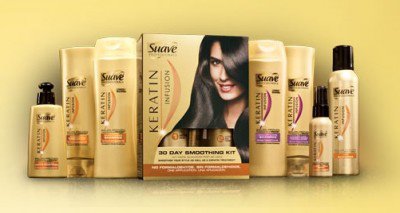
Suave Professionals Keratin Infusion 30 Day Smoothing Kit Investigation

Wasserman, Comden, Casselman & Esensten L.L.P. is currently investigating alleged false, deceptive, and misleading claims made by Unilever in connection with the company’s marketing of purported “Formaldehyde Free” Suave Professionals Keratin Infusion 30 Day Smoothing Kit (“Product”).

Unilever is one of the world’s leading suppliers of fast moving consumer goods. Unilever markets the Product under its wholly owned Suave brand name as a Keratin-based hair straightening product that is “an affordable at-home alternative” to professional salon treatments that’s “formaldehyde free.”

However, Unilever may not be able to substantiate its claims. In addition, Unilever may have failed to inform consumers that the Product contains a chemical known as “Tetrasodium EDTA,” which is mainly synthesized from formaldehyde. Unilever also may have failed to inform consumers that the Product contains a chemical preservative known as “DMDM Hydantoin,” which is an antimicrobial formaldehyde releaser with the trade name Glydant. Formaldehyde has been classified as a known human carcinogen (cancer-causing substance) by the International Agency for Research on Cancer and as a probable human carcinogen by the U.S. Environmental Protection Agency. An investigation is underway regarding Unilever’s marketing and advertising practices under the Suave brand name. Unilever states on there website that 160 million times a day, someone somewhere chooses a Unilever product. From feeding your family to keeping your home clean and fresh, our brands are part of everyday life.

List of Unilever brands

  • Alberto-Culver
  • Axe
  • Becel
  • Blue Band
  • Domestos
  • Dove
  • Flora
  • Heartbrand
  • Hellmann’s
  • Knorr
  • Lifebuoy
  • Lipton
  • Lux (soap)
  • Lynx
  • Omo
  • Rexona
  • Simple
  • Sure
  • Surf
  • Sunsilk
  • TIGI (haircare)
  • Wall’s
  • Vaseline – This should be very interesting on the outcome of this lawsuit! I thought everyone would learn from this with the outcome of Brazialian Blowout!

Valid Or Not Valid: The Truth about Contracts

So many professionals have invested in our beauty industry in becoming a Paul Mitchel salon. And have been let down by the huge conglomerate by not policing their end of the contract that they make you sign when purchasing the hair care line in your salon. That is why there is a huge class action lawsuit brought on to them by no one but themselves.  Contracts in this profession do not hold up in court.  This false advertising lawsuit was filed in New York Federal Court on July 1, 2010, against the following: L’Oreal USA, Inc., the owners of Matrix, Redken, Pureology, Kerastase and others; The Procter and Gamble Company, the owners of Wella, Sebastian, Nioxin, and Graham Webb; Conair Corporation, the owners of Rusk; Farouk Systems, Inc., the owners of Chi and Biosilk; Sexy Hair Concepts, LLC; Tigi Linea, LP; and John Paul Mitchell Systems. This is what corporate greed gets you. 
The purpose of a contract is to ensure the completion of actions based on specific guidelines or stipulations for the parties involved. Incidentally, most people think that in order for a contract to be valid it has to be written, but that isn’t always the case.


A valid contract does however need to contain certain elements. First of all, it needs to identify all the parties involved. Secondly, it needs a mutual consent between the parties. Typically, there is an offer and acceptance that takes place between the parties that is communicated in the contract.


Thirdly, a valid contract needs to have an object, which is the portion of the contract that is actually being agreed upon. For this part, it is best to be specific on dates, deadlines, payments, breach of contract requirements, and termination conditions.


The fourth element is the consideration factor. The consideration shows what each party will gain as a result of the agreement. Paul Mitchel Systems offers “A EXCLUSIVE” to the product in your salon. Do you see the product anywhere else? I see it all over the commercial sector of the beauty industry.  Is that what you signed for.


The next time you see a contract, make sure it includes all the above elements. If it doesn’t, or if there is a portion that you question, you should probably contact a lawyer before you take any action. When considering buying Paul Mitchell products be assured that there end of the bargain will be in the commercial sector of retailing and not your salon. When considering of having a retail line in your salon, go with independent manufacturers within the beauty industry. AND DONT SIGN A CONTRACT. It is a waste of ink.