Real Hair Truth Cosmetic/Beauty Product Injury Lawsuits

the real hair truth

Injuries from cosmetic products can come in a wide variety of forms — from allergic reactions to infections and other complications. There are two main legal theories that a person injured by a cosmetic product (the plaintiff) could sue under: product liability and breach of warranty. This article discusses what a plaintiff in a cosmetic injury suit must prove under either theory, cases specifically related to allergic reactions, and the possibility of class action lawsuits.

Product Liability: The Basics

The most likely theory to be used in a lawsuit involving cosmetic product injuries is product liability. An injured plaintiff can sue both the manufacturer and/or the seller (the defendant) of the cosmetic product if his or her injury was caused by a defect, a defective design or improper labeling. Most states follow what is called the “strict product liability” rule, although a few still use traditional negligence rules.

A plaintiff suing under a strict liability theory simply needs to prove:

  • that he or she was the kind of consumer that the defendant intended to use the product
  • that the defect did not occur after the product was sold, and
  • that the plaintiff was injured.

This kind of theory is called “strict liability” because many of the requirements in a standard negligence case, like proof of a specific duty of care owed to the plaintiff, are not included. Most states adopted strict liability for mass-marketed consumer products because, among other things, the manufacturers needed to be financially responsible for their products, and not be allowed to escape liability simply because of the difficulty plaintiffs faced trying to prove negligence claims.

In a negligence case (in those few states that still use this theory for consumer products), the plaintiff will need to prove:

  • that he or she bought the product from the defendant
  • that the defendant should have known that the product could be dangerous if unaccompanied by proper warnings, or that the product had a defect
  • that the failure to warn the plaintiff, or the defect or defective design, injured the plaintiff, and
  • that the plaintiff didn’t do anything to cause the injury.

Breach of Warranty

A cosmetic product injury case based on a breach of warranty theory will be the same as other standard breach of warranty cases.

An injured plaintiff could sue for breach of an express warranty if the seller or manufacturer made specific guarantees that a product would have specific effects that the product did not have (note that this theory might not fit with most cases involving an actual injury).

The plaintiff could also sue for breach of an implied warranty that the cosmetic product was fit for normal use, i.e. the implied guarantee that no normal cosmetic product would cause an injury if used properly.

Finally, the plaintiff could sue for breach of an implied warranty that the product was fit for a specific purpose, i.e. that the defendant knew the plaintiff wanted to use the product for a specific purpose, but the product caused an injury when the plaintiff tried use it.

There are many state and federal laws controlling breach of warranty claims. Some breach of warranty claims may not be appropriate when the plaintiff is suing for physical injuries, if the law only allows compensation for the money lost on the product (what is called “economic damages”).

Some warranty laws, however, do allow a plaintiff to sue for physical injuries. Perhaps more importantly, proving a breach of warranty can help prove a strict liability or negligence claim. A plaintiff is not limited to suing under one theory, so including a breach of warranty claim in a cosmetic injury lawsuit will generally help a plaintiff’s case overall.

Injuries Caused by Allergies

If a manufacturer knows, or should know, that a product might cause an allergic reaction in some people, injured plaintiffs could potentially sue the manufacturer for failing to warn about the allergic reaction under a strict liability or negligence theory. A breach of warranty theory might also be possible if the allergic reaction is not extremely rare, i.e. the product was not fit for cosmetic use because some percentage of the population was allergic.

Class Actions for Cosmetic Product Injuries

If a cosmetic product causes many or all of its users the same kind of injury, then a class action may be possible. In a class action case, multiple plaintiffs with the same kind of injury from the same source sue the defendant in one lawsuit.

If someone is injured by a cosmetic product, they or their attorney should research whether there is already a class action case or a settlement fund for people injured by the product. Often, even though the case has settled, there will be a fund to pay those who were not a part of the original case.
Real Hair Truth what makes a cosmetic misbranded?

The Beautiful Lies

The film “Beautiful Lies” release date will be in 2014

In our beautiful world cosmetics hold a strong life in the world of personnel beauty. According to the U.S Government this is a definition of what is “Misbranded”.  Realize my friends that in this day and age government is in everything you do, and with the past and current behavior of the U.S Government would you even take there word on just about anything. Politicians cannot even agree on anything anymore, there life span as a senator, congressman, house representative is for life. Your freedom of speech is going down the drain. So why would you take the word of the FDA. According to the United States Food and Drug Administration (FDA), its responsibilities include “protecting the public health by assuring that foods, cosmetics are safe, wholesome, sanitary and properly labeled.” This responsibility entails regulating a large number of companies producing this nation’s food, making appointments to the high-level positions within the agency very important.  Most high-level FDA employees have a background in either medicine or law, but one of the largest private-sector sources is the Monsanto Company. Over the past decades, at least seven high-ranking employees in the FDA have an employment history with the Monsanto Company.

Well aware of its accused ‘revolving door’ connection with the FDA and other government agencies, Monsanto has issued several press releases denying collusion with the government. In fact, it posted on its official website that collusion theories relating to these agencies, including the FDA, “ignore the simple truth that people regularly change jobs to find positions that match their experience, skills and interests.  ”

Monsanto’s statements help shed light on the balancing act regularly occurring on Capitol Hill when appointments to these top agency positions arise. The importance of the food, cosmetic industrys cannot be overstated and, therefore, the pending question remains: Do Americans want industry insiders regulating it, or those from the academic realm?

What makes a cosmetic misbranded?

Section 602 of the FD&C Act [21 U.S.C. 362] describes what causes a cosmetic to be considered misbranded:

“A cosmetic shall be deemed to be misbranded–

  • (a) If its labeling is false or misleading in any particular.
  • (b) If in package form unless it bears a label containing (1) the name and place of business of the manufacturer, packer, or distributor; and (2) an accurate statement of the quantity of the contents in terms of weight, measure, or numerical count: Provided, That under clause (2) of this paragraph reasonable variations shall be permitted, and exemptions as to small packages shall be established, by regulations prescribed by the Secretary.
  • (c) If any word, statement, or other information required by or under authority of this Act to appear on the label or labeling is not prominently placed thereon with such conspicuousness (as compared with other words, statements, designs, or devices in the labeling) and in such terms as to render it likely to be read and understood by the ordinary individual under customary conditions of purchase and use.
  • (d) If its container is so made, formed, or filled as to be misleading.
  • (e) If it is a color additive, unless its packaging and labeling are in conformity with such packaging and labeling requirements, applicable to such color additive, as may be contained in regulations issued under section 721. This paragraph shall not apply to packages of color additives which, with respect to their use for cosmetics, are marketed and intended for use only in or on hair dyes (as defined in the last sentence of section 601(a)).
  • (f) If its packaging or labeling is in violation of an applicable regulation issued pursuant to section 3 or 4 of the Poison Prevention Packaging Act of 1970.

Note that under the FD&C Act, the term “misbranding” applies to–

  • False or misleading information,*
  • Lack of required information,
  • Conspicuousness and readability of required information,
  • Misleading packaging,
  • Improper packaging and labeling of color additives, and
  • Deficiencies where the Poison Prevention Packaging Act requires special packaging.

*Note: According to the FD&C Act, a determination that labeling is “misleading” includes considering both what the label says and what it fails to reveal:

“If an article is alleged to be misbranded because the labeling or advertising is misleading, then in determining whether the labeling or advertising is misleading there shall be taken into account (among other things) not only representations made or suggested by statement, word, design, device, or any combination thereof, but also the extent to which the labeling or advertising fails to reveal facts material in the light of such representations or material with respect to consequences which may result from the use of the article to which the labeling or advertising relates under the conditions of use prescribed in the labeling or advertising thereof or under such conditions of use as are customary or usual” (FD&C Act, sec. 201(n); 21 U.S.C. 321(n)].

In addition, a cosmetic marketed in violation of the FPLA or any regulations issued under its authority is considered misbranded within the meaning of the FD&C Act [15 U.S.C.1456(a)]. For cosmetics offered for sale as consumer commodities, the FPLA–

  • requires further label information, such as the product’s identity [15 U.S.C.1453], and
  • authorizes the implementation of regulations to specify the proper presentation of required label information, require an ingredient declaration, and prevent deceptive packaging [15 U.S.C.1454 (c)]

The FPLA defines a consumer commodity, as it applies to FDA-regulated products, as:

“any food, drug, device, or cosmetic (as those terms are defined by the Federal Food, Drug, and Cosmetic Act …, and any other article, product, or commodity of any kind or class which is customarily produced or distributed for sale through retail sales agencies or instrumentalities for consumption by individuals, or use by individuals for purposes of personal care or in the performance of services ordinarily rendered within the household, and which usually is consumed or expended in the course of such consumption or use.” [15 U.S.C.1459(a)]

Note that the FPLA defines a consumer commodity by the way it is marketed, not the way it is labeled. Labeling a product with words such as “For Professional Use Only” does not keep your product from being considered a consumer commodity under the FPLA.

Labeling regulations are very complex. Detailed information on cosmetic labeling is available in FDA’s Cosmetic Labeling Manual and the labeling regulations themselves [21 CFR 701].

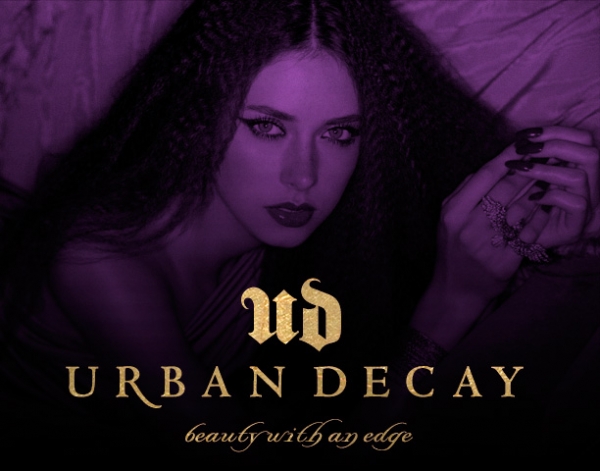
Urban Decay Cosmetics is still the same, Thank God!

realhairtruth.com

The French cosmetics giant has agreed to acquire Californian privately owned makeup company, Urban Decay Cosmetics LLC.  This was printed in 2012 and I am thankful L’Oreal has not changed the product ingredients.  And talking to my fellow MUA’s in the film industry they still have excellent reviews of the product! Let the reviews speak for themselves!

“Urban Decay is amazing. if you’re starting out I would buy the Urban Decay primer potion, a 24/7 eyeliner and a palette or just a couple of colors. there products all work extremely well and are very pigmented.”

“Yes, their eyeliners are amazing. They are high-quality and never smudge or fade from my eyelids. I love the colors, especially in the sets. However, if the quality wasn’t so good, I wouldn’t buy them because the price is so high.”

“They’re shadows are amazing! They all are so pretty and smooth, and they have billions of cool colors. I also like their colored mascaras (like in purple or blue) even though I only know one person who could pull them off, ME!”

Famous for cult favorites such as the much coveted Naked Palette, Urban Decay is well known for its “beauty with an edge” range of products that is popular among youthful, highly-involved cutting-edge consumers who are attracted by the fashion-forward image of the brand.  Currently, Urban Decay is available mostly in Sephora and through its online stores – but with this new development with L’Oreal, it is possible that the brand will be more accessible to the masses through multiple channels such as other brands under its wing such as Maybelline New York, and Lancome.  The closing is subject to regulatory approval, which is expected by the end of the year. What do you think of this new development? Excited to see if Urban Decay cosmetics would be more affordable now, or worried that the acquisition would affect the overall style of the brand that made it so appealing in the first place – not to mention their different practices in regards to animal testing?

This has been over a year now my friends, and the product is still the same. So they have no changed the ingredients of the cosmetic line at all. Urban Decay’s continued quality is put in question since UD is a department store brand, and for many people the first association they make with the name L’Oréal is the drugstore brand of hair products and cosmetics. However, L’Oréal is large corporation that owns many brands. Their portfolio actually includes more luxury brands such as Lancôme and YSL than what they term “consumer products,” which is where L’Oréal Paris falls. The fact that L’Oréal has such a diverse portfolio means that UD fans can rest easy when it comes to quality and the brand’s overall image, since L’Oréal’s acquisition history indicates that the company acquires brands because it can benefit from what the brand is already doing, as with The Body Shop’s 2006 acquisition, not to change the brand.  But now I can find it on the sales rack at ULTA.

REALHAIRTRUTH.COM

The matter of cruelty-free cosmetics is a trickier issue. While Urban Decay has committed to remaining cruelty-free despite the acquisition, can the same be said for all other brands in L’Oréal’s portfolio? The answer is complicated. Urban Decay’s website states that UD neither tests finished products on animals nor do they use raw materials that have been tested on animals. L’Oréal has not tested finished products on animals for 20 years, but the product ingredients have been tested on animals. This is not by L’Oréal’s choice: European Union regulations require ingredients to be tested on animals (L’Oréal is based in France). L’Oréal is also a big contributor to and a founding member of the European Partnership for Alternatives to Animal Testing (EPAA), an organization that aims to end mandatory animal testing by producing new testing methods that still ensure consumers’ safety.

So what will change for Urban Decay once the acquisition is final? On the surface, probably nothing. The brand will retain the same image and policies. But on a macro-level, buying Urban Decay will mean generating profit for L’Oréal, and L’Oréal is in a gray area when it comes to animal testing. On the one hand, L’Oréal appears committed to ending animal testing and supports an organization that is working towards this goal, but on the other hand it is impossible for L’Oréal to completely stop animal testing at the moment due to regulations.

The issue brings a sad connotation to the popular phrase: beauty is pain.

For the entrepreneur the beauty industry is good news!

THE REAL HAIR TRUTH

Beauty Industry in 2013 at a Glance

Comprised of a diverse yet interrelated set of business lines, the beauty industry helps us look and smell our best. Before we leave the house each day, we have likely undergone our personalized beautification ritual. Included in this ritual is the daily shower and shave, the weekly nail trim, and the monthly haircut. And increasingly we are taking a more holistic view of our health, and our beautification ritual may now include a periodic massage and trip to the spa. But our concern with our appearance is hardly anything new; indeed the beauty industry has been expanding and growing for all of recorded history. For the interested entrepreneur this continuing growth and evolution offers a diverse menu of opportunity.

The beauty industry today encompasses far more than cosmetics and skin care products, though they are still a significant portion of the sector. A wide range of services and products are available to help us put our best face forward, and the beauty industry now also encompasses hair styling and hair removal, nail and tanning salons,massage parlors, shower and shaving products, perfumes, colognes and more. Many people now treat their beauty ritual as an escape from the hustle of the information age, whether its a few minutes spoiling oneself with a high-end product or a full day at a luxury spa.

Lotions, Treatments and Baths. Oh my!

Beauty industry opportunities can be broadly separated between products and services, though many providers offer both. Within both products and services, however, exist a wide range of business models based on target market, production processes and location.

From exfoliating soaps and volumizing shampoos to anti-wrinkle creams, the beauty industry provides us with choices galore to keep us looking younger and healthier. Cosmetics exist for every style and taste, as well as every skin tone, texture and even allergy. Rows of toothpaste stretch off into the distance at the local retail outlet, and it is no longer a choice only of brand, but between whitening, tartar protection, flavor, packaging styles and more! And a similar story is told in the aisles for perfume, deodorant and hair coloring. Certain businesses also distinguish themselves through manufacturing processes such as using all natural ingredients or a refusal to use animal testing on products.

While the diversity among service providers is not quite as extensive, there is considerable differentiation between offerings based on price, location and target markets. Some businesses target the inexpensive, fast hair cut market while others focus on providing a luxury spa experience. Franchise opportunities exist for hair salons, skin treatments, nail care, and tanning. Niche providers offer products and services focused on children, weddings,  and fashion, among others.

Different Beauty Franchise Opportunities

Hair Care Stylists, salons, shampoos/conditioners, coloring product, styling product (gels, sprays, etc)
Cosmetics & Skin care Make-up, moisturizing lotions, tanning salons, sun care products
Fragrance Perfumes, body sprays, cologne, deodorants
Miscellaneous Nail polish, shaving products, massage parlors, hair removal services

Beauty Industry Trends

Such diversity and innovation exists because we demand it. The beauty industry continues to expand globally, with some projections claiming 8.5% growth by 2014; revenue growth in 2010 is estimated at 3.3%. Several trends support this expansion and promise continued profitability into the future.

Globally, rising per capita incomes and greater access to international markets are increasing spending on discretionary items such as perfumes and cosmetics. Though the recent economic turmoil had decreased spending on some discretionary products in the United States, purchasing of beauty products has remained strong. Consumers did tend to be more price-conscious however, with over 70% of survey respondents claiming to give mass market products more consideration over high-end products during the downturn.

Perhaps not as surprising as it once was, one of the fastest growing segments of the beauty industry is products and services aimed at men. Traditionally focused on female consumers, men today are gaining increasing attention from the beauty industry. Of course most of us have been using deodorant and toothpaste for several months already, but increasingly men are being targeted for body sprays, specialty hair products, lotions and even nail care. Salons offer a menu of pampering services for men, including cuts and shaves, facials, massages and manicures.

Consumers of beauty industry products tend to be brand loyal, and share what works for them with their friends. 58% of those surveyed claimed that personal recommendations weigh more heavily than celebrity marketing, and only 44% bought a particular product for its claim of specific product attributes. Like many things, beauty products gain a level of familiarity and comfort for the consumer, and switching to a new product often takes some extra incentive. Popular and successful marketing campaigns in the beauty industry often include a free sample and discounts for referrals to lure new customers in, and loyalty programs to keep them.

Beauty Industry Franchise Opportunities

From product innovation, organic industry growth and continued growth into the male half of the population, the beauty industry continues to offer a diverse set of profitable franchising opportunities. Beauty franchises exist across the space with dozens of strategies reaching all types of consumer.

Retail opportunities include brick-and-mortar store locations as well as home-based businesses, and span across cosmetics, skin care, hair care, tanning and more. Frequently producers of beauty industry products will have a franchising distribution system, or even have training locations for service providers. Cosmetic and skin care entrepreneurs offer specialized services such as nail care and tanning, a complete menu designed for the full day experience and everything in between. Some salons offer an exclusive membership experience and others specialize on walk-in business.

Hair care opportunities exist for barbers and stylists alike, with a range of different franchises available based on cost, location, and gender. Many male-focused franchises offering everything from the basic barbershop have been springing up to complement the traditionally female-focused salon offerings. Franchise chains devoted to children offer a more entertaining environment for kids. There are also businesses focused on hair removal and coloring.

splish-franchise-opportunities

Eco-friendly salons such as the Splish franchise offer hair care in an environmentally conscious environment.

As we can see, the beauty industry encompasses a wide range of products and services, and franchising plays a major part in bringing them to the consumer. As the industry continues to grow and evolve, profitable opportunities will abound…the hard part is choosing which one!

Trailer for the film, “The Beautiful Lies”

Pretty good reviews for all the Trailers for the film. ‘The Beautiful Lies”!
The Beautiful Lies (Official Trailer) – 48,888 views – 2 months ago By Andy Mathias
“The Beautiful Lies” (Official Trailer) – 44,043 views – 1 year ago By Mike Gottino
“The Beautiful Lies” (Official Trailer) – 40,612 views – 2 months ago By Paulo
Way to go to all three editors for the film!

The Beautiful Lies is a documentary about the cosmetic/beauty industry featuring the up’s and downs of entrepreneurship in a industry dominated by major manufacturers. This film also covers product labeling, product marketing,and deception of universal hair care, hair color and treatments that are sold to the consumer. We are showing the viewer the few great entrepreneurs of the beauty/cosmetic industry who still value their craft and the peaks and valleys they go through! Release date December 2013.

Joseph Kellner