Ultimate Skincare & Beaute Report on the Documentary!

The last two weeks for me have been a re-education in the hair industry.  I received a copy of Joseph Kellner’s The Real Hair Truth and immediately, I was taken to a place where I was forced to think about everyone who had ever touched my hair.  Remembering back to age 10, I could recall just about everyone who made my locks lovely to the one who butchered my long fab coiff a few years ago.  My mind stayed in one very happy place, remembering the incredible talent I had promoted and marketed in the Chicago market.  I was proud to represent the talent who worked as hard as I did to maintain that artistic and technical edge.  At times, I would even attend the education sessions to better understand what the stylists and colorists went through to meet requirements and maintain client trust.  Everyone seemed to take such pride in what they did and knew where they wanted to go and what they needed to do to get there.  From this vantage point, I was shocked to see the variable of responses collected by Joseph Kellner and fully understood the reasons behind the answers.  Based on one of the last experiences I had, I fully see the need for continuing education and accountability for higher educational standards in the salon industry.  It has been best said…you don’t know what you’ve got until it’s gone.

While watching The Real Hair Truth for the second time, I stopped the video to collect my thoughts and write…the first time I Tweeted throughout the film and wanted to capture pertinent details.  A rush of thoughts came forth.  The first, all the wonderful professionals I have had the honor to interact with in the industry.  These professionals get it.  They have single-handedly been able to create a name for themselves in this industry and in a very powerful way.  Expressing my gratitude to them in this post is the humblest homage I can offer.  J. G. – A consultation with this man is worth its weight in gold.  When I met him, I represented a salon on Oak Street in Chicago.  An hour with him is like saving yourself 20 years in growing pains.  To have him as a mentor for only an hour made my career.  His contributions?  I now know about Luiz Alvearez and Aquage hair care (and the continuing education surrounding the brand).  I know about better, more streamlined ways to effectively market a salon/spa business (I amazed myself by incorporating his words and generating 10K a month in sales volume).  Of course, much more was learned, but these two stand out most.  Martin Rodriguez.  Phil Stone.  Maurice Tidy.  Shane Talbott.   There are many, many others.  Two of the common threads that brings them together is their passion for the industry and maintaining high standards across the board!

If you were asked to cite the qualifications of anyone who has touched, cut or colored your hair, what would you answer? When I lived in Germany, answering this was a no-brainer.  Everyone who touched hair, unless they were actually participating in an apprenticeship, was required to go through a rigorous four year apprenticeship where the master stylist would stand over the student instructing and ready to step in if needed.  My hair dresser, Lilo, was incredible.  When I promoted salons in Chicago, I could confidently answer this question with impressive answers…more like bragging about the credentials of the talent I helped.

How much continuing education does your hair dresser participate in annually?   #TheRealHairTruth When asked in an open interview, one hair dresser admitted to the required six hours and attending two shows.  The salons I worked with in Chicago participated in regular if not weekly education classes.   Are you aware of the qualifications for beauty students to be able to graduate? Some states require 1200 hours while others only require 1000 hours.  What kind of testing is required for beauty students to receive their license? Written or computerized theory. There are no standard practical requirements in finalized testing.


Diversion and No-Diversion


Another real hair truth that was once again brought to my attention…product diversion.   For those who are not aware of the definition behind the word…basically it boils down to a company who sells their products to one type of business or many types of businesses.   For example, a product company who only sells their products to only salons can say their brand is a no-diversion brand.  There are companies who claim their products are sold only in salons when they are sold in discount and other retailers outside the salon industry.  This is an example of diversion.


Keeping this in mind, I watched as Joseph Kellner approached countless retailers in an attempt to find out the reason why products that were labeled ‘sold only in salons’ were brightly displayed on the long side counters of discount retailers.  No one seemed to be able to provide an answer with a closed ending. Do you know if the beauty products you use that are suppose to be sold in salons and spas are pure to their commitment to remaining sold only in these professionally serviced/licensed businesses?  This has been a question asked by many over the years.  I never really gave it much thought until I started working in the salon and spa industry and was held accountable for selecting unique brands not found in chain businesses or mass and discount markets.

What would you think if you found your favorite hair care product at a major retail chain, on sale only to turn over the bottle to see the words “Only Sold In Professional Salons” in bold lettering?  Would you be so inclined to hold off buying or take the deal?  IF you were salon owner who signed a contract with a major hair product company and found the products you sell in your salon at a discounted price at a major retailer, what would you think?  What would you do?  Would you hold the hair care company accountable or would you keep quiet?  Would you trust a product line that sells under these conditions?  Would the sinking sensation in your gut and disappointment of a first-time offense finding,  make you want to change directions?  How can something designed to finish and make pretty become such an ugly situation?

The Reason Behind The Truth

One salon owner and ‘industry watch dog’, Joseph Kellner, saw a need to bring this and other topics to the fore front and educate those in the industry about these not-so-best practices and other ‘hot’ issues.  His movement is called The Real Hair TruthThe Real Hair Truth is a collection of interviews conducted by Joseph and his team to find the answers to these and other hard-hitting questions surrounding the glamorous world of hair.  In this documentary, long term industry veterans tackle mainly the don’ts and should nots in the industry.

In summary, I fully understand and support how educational standards need to be increased and maintained.  Students need to be taught theory, practical and marketing skills that will set them up for future success.  They need to work with a master within an apprenticeship program to enhance and encourage skills.  Practical skills should be required to graduate as well as a higher number of hours.  Students need to be made aware of what they want to do when they graduate and be educated as to what is out there in the industry for them.  Making educated choices yields better results.  Continuing education standards need to be raised and maintained.  Where as it concerns diversion, I applaud those companies who have the control over their business that results in them being able to say they are a no-diversion product company.  Joseph Kellner, thank you for bringing these and other issues in the industry to the fore front.

Have a good week.

@BeautePublicist


The Real Hair Truth Documentary Blog!

Policy gaps and unsafe products!

 
Four federal agencies are responsible for regulating hair straighteners laced with toxic chemicals – a bureaucratic headache as far as consumers are concerned.

The Real Hair Truth Documentary Blog!.

Read Now on Blogger!

What Cosmetic Labeling & Label Claims have to say!

Cosmetic Labeling & Label Claims

Proper labeling is an important aspect of putting a cosmetic product on the market.  And this is a big topic in our next Documentary. FDA regulates cosmetic labeling under the authority of both the Federal Food, Drug, and Cosmetic Act4 (FD&C Act) and the Fair Packaging and Labeling Act5 (FPLA). These laws and their related regulations are intended to protect consumers from health hazards and deceptive practices and to help consumers make informed decisions regarding product purchase.

It is illegal to introduce a misbranded cosmetic into interstate commerce, and such products are subject to regulatory action. Some of the ways a cosmetic can become misbranded are:

  • its labeling is false or misleading,
  • its label fails to provide required information,
  • its required label information is not properly displayed, and
  • its labeling violates requirements of the Poison Prevention Packaging Act of 1970 [FD&C Act, sec. 602; 21 U.S.C. 362].

Does FDA pre-approve cosmetic product labeling?

No. FDA does not have the resources or authority under the law for pre-market approval of cosmetic product labeling. It is the manufacturer’s and/or distributor’s responsibility to ensure that products are labeled properly. Failure to comply with labeling requirements may result in a misbranded product.

Some labeling terms you should know

Before proceeding with a discussion of labeling requirements, it is helpful to know what some labeling terms mean:

  • Labeling.This term refers to all labels and other written, printed, or graphic matter on or accompanying a product [FD&C Act, sec. 201(m); 21 U.S.C. 321(m)].
  • Principal Display Panel (PDP).This is the part of the label most likely displayed or examined under customary conditions of display for sale [21 CFR 701.10].
  • Information Panel. Generally, this term refers to a panel other than the PDP that can accommodate label information where the consumer is likely to see it. Since the information must be prominent and conspicuous [21 CFR 701.2(a)(2)], the bottom of the package is generally not acceptable for placement of required information, such as the cosmetic ingredient declaration.

Is it permitted to label cosmetics “FDA Approved”?

No. As part of the prohibition against false or misleading information, no cosmetic may be labeled or advertised with statements suggesting that FDA has approved the product. This applies even if the establishment is registered or the product is on file with FDA’s Voluntary Cosmetic Registration Program6 (VCRP) (see 21 CFR 710.8 and 720.9, which prohibit the use of participation in the VCRP to suggest official approval). False or misleading statements on labeling make a cosmetic misbranded [FD&C Act, sec. 602; 21 U.S.C. 362].

What about therapeutic claims?

Be aware that promoting a product with claims that it treats or prevents disease or otherwise affects the structure or any function of the body may cause the product to be considered a drug. FDA has an Import Alert in effect for cosmetics labeled with drug claims7. For more information on drug claims, refer to Is It a Drug, a Cosmetic, or Both? (Or Is It Soap?)8.

How should products be labeled if they are both drugs and cosmetics?

If a product is an over-the-counter (OTC) drug9 as well as a cosmetic, its labeling must comply with the regulations for both OTC drug and cosmetic ingredient labeling [21 CFR 701.3(d)]. The drug ingredients must appear according to the OTC drug labeling requirements [21 CFR 201.66(c)(2) and (d)] and the cosmetic ingredients must appear separately, in order of decreasing predominance [21 CFR 201.66(c)(8) and (d)]. Contact the Center for Drug Evaluation and Research10 (CDER) for further information on drug labeling.

What languages are acceptable?

All labeling information that is required by law or regulation must be in English. The only exception to this rule is for products distributed solely in a U.S. territory where a different language is predominant, such as Puerto Rico. If the label or labeling contains any representation in a foreign language, all label information required under the FD&C Act must also appear in that language [21 CFR 701.2(b)].

What labeling information is required?

The following information must appear on the principal display panel:

  • An identity statement,indicating the nature and use of the product, by means of either the common or usual name, a descriptive name, a fanciful name understood by the public, or an illustration [21 CFR 701.11].
  • An accurate statement of the net quantity of contents, in terms of weight, measure, numerical count or a combination of numerical count and weight or measure [21 CFR 701.13].

The following information must appear on an information panel:

  • Name and place of business.This may be the manufacturer, packer, or distributor. [21 CFR 701.12].
  • Distributor statement.If the name and address are not those of the manufacturer, the label must say “Manufactured for…” or “Distributed by…” [21 CFR 701.12].
  • Material facts.Failure to reveal material facts is one form of misleading labeling and therefore makes a product misbranded [21 CFR 1.21]. An example is directions for safe use, if a product could be unsafe if used incorrectly.
  • Warning and caution statements.These must be prominent and conspicuous. The FD&C Act and related regulations specify warning and caution statements related to specific products [21 CFR part 700]. In addition, cosmetics that may be hazardous to consumers must bear appropriate label warnings [21 CFR 740.1]. An example of such hazardous products is flammable cosmetics.
  • Ingredients. If the product is sold on a retail basis to consumers, even it it is labeled “For professional use only” or words to that effect, the ingredients must appear on an information panel, in descending order of predominance. [21 CFR 701.3]. Remember, if the product is also a drug, its labeling must comply with the regulations for both OTC drug and cosmetic ingredient labeling, as stated above.


OSHA Warns Brazilian Blowout!


Mr. Michael Brady
CEO, Oill LLC dba Brazilian Blowout
6855 Tujunga Ave.
Nortb Hollywood, CA 91605


Dear Mr. Brady,


The purpose of this letter is to alert you to an issue that has been brought to the attention of the Occupational Safety and Health Administration (OSHA). OSHA has become aware of your August 24, 2011, letter sent to salon owners. The letter states, and your website implies, that “all OSHA and independent air-quality tests conducted on the Brazilian Blowout Professional Smoothing Solution, as well as all others in this category, have yielded results well-below even the most stringent ofOSHA standards (AL, PEL, STEL).” Please be advised that we disagree with this statement.


Earlier this year, an OSHA inspection at a salon found that workers using Brazilian Blowout Acai Professional Smoothing Solution were exposed to formaldehyde levels that exceeded OSHA’s 15-minute short term exposure limit (STEL) of2 ppm. A citation was issued to the employer after OSHA inspectors conducted air sampling. This is only one example, but there are other instances where OSHA investigations have found exposures to formaldehyde exceeding legal limits in workplaces applying professional hair smoothing solutions. Further, OSHA’s laboratory performed analysis of bulk samples of your product, which revealed significant levels of methylene glycol (known to release formaldehyde) to be present. Pursuant to 29 CFR 1910.1048, the agency requires manufactures of products that contain or potentially release fomlaldehyde to include information about the chemical and its hazards on the label and in the material safety data sheets. Hazards associated with formaldehyde must be listed if it is present in the product at 0.1 % or more (as a gas or in solution) or if the product releases formaldehyde into the air above 0.1 parts per million.


It is improper to provide misleading information or make misrepresentations regarding OSHA, or to use the agency’s name to promote a private enterprise, product, or service. When such use comes to our attention, we insist that any and all implied or stated references to OSHA are discontinued immediately. Therefore, we request that you take the following corrective action:


  • Remove any and all false, misleading or other statements referencing OSHA regarding your product from your website.
  • Send out a correction/retraction to your August 24, 20 II, letter to salon owners, clearly stating that OSHA air quality tests conducted on Brazilian Blowout Acai Professional Smoothing Solution have yielded results above acceptable OSHA limits.


Attached please find OSHA’s hazard alert on hair smoothing products that could release formaldehyde. Thank. you for your attention to this very important matter.


Sincerely,

Frank Meilinger, Director
Office of Communications

Formaldehyde unsafe as used in hair straighteners, CIR Says!

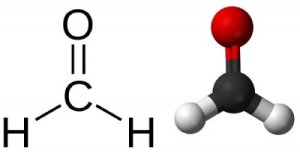
After months of polemics over the safety of hair straighteners containing high concentrations of formaldehyde, the Cosmetic Ingredient Review Expert Panel (CIR), classified formaldehyde and methylene glycol as “unsafe under present conditions of use” in these products.

The CIR Expert Panel gathers scientists, dermatologists, pharmacologists and toxicologists, under the aegis of the U.S. Personal Care Products Council, with the mission to independently and scientifically assess the safety of ingredients used in cosmetics in the U.S. The Panel assessed the safety of formaldehyde and methylene glycol at the request of FDA, The Real Hair Truth, and the Personal Care Products Council  after a succession of safety alerts regarding hair straightening treatments with high formaldehyde levels.

The Expert Panel noted that the safety of methylene glycol and formaldehyde in hair straightening products depends on a number of factors, including the concentration of formaldehyde and methylene glycol, the amount of product applied, the temperature used during the application process, and the ventilation provided at the point of use. The Panel concluded that under present practices of use and concentration, formaldehyde and methylene glycol are unsafe in hair straightening products. “In no case should the formalin [1] concentration exceed 0.2% (w/w), which would be 0.074% (w/w) calculated as formaldehyde or 0.118% (w/w) calculated as methylene glycol,” said the CIR.

CIR reached its conclusion after a comprehensive review of the available safety data and information and a robust discussion of this difficult and complex issue. We support the panel’s findings,” said Jay Ansell, Council scientist and vice president of cosmetic programs at the Personal Care Products Council.

The panel also concluded that formaldehyde and methylene glycol are safe for use as a preservative in cosmetics at minimal effective concentration levels and that do not exceed established limits and are safe in nail hardening products in the present practices of use and concentration (1 – 2%). However, the Panel did note that “the present practices of use of nail hardeners do include instructions that admonish users to limit application of the material to the nail, allow it to dry fully, and to not get the material on the skin.

It is now up to the FDA to decide whether or not to restrict the use of these substances in cosmetic products placed on the US market.