LOreal Misleading Again!

The Real Hair TruthSo Many hairdressers in my industry use LOreal hair color and there products. And so many don’t take the time to really find out that they are in competition with there manufacturer. Who will pledge allegiance too you and will send the “Best Snake Oil Salesman”, too you to inform you on the usage of there color and products that you can buy on the internet. You don’t really understand the how good these company’s are doing you wrong and also to the beauty industry.

Here is a good tidbit to chew on and to really think about how these company’s work behind the scenes to squeeze out every nickel and dime from there products. Advertising can be very misleading to the professional and to the consumer.  Go ahead and click on the link first for the complaint and read about the case filed in court.

November 2013: A federal judge denied final approval of a class-action lawsuit against L’Oréal USA, Inc. The complaint, originally filed in April 2013, alleged that the company misleadingly markets professional hair care products as only available for purchase in salons when the products are actually available for purchase in major retail outlets. According to the settlement terms, the company agreed to remove the misleading labels from the product packages for a period of five years. The Court rejected the settlement because (1) the salon-only purchasers and the retail outlet purchasers had different interests and so the class certification, a requirement for settlement, was inappropriate; and (2) the settlement was not fair, reasonable, and adequate because the company only agreed to stop the misleading labeling for a limited time and the class received no monetary award. (Richardson et al v. L’Oreal, Case No. 13-cv-00508, District of D. C.).

Misleading Information

 You the professional LEGALLY HAS the full liability of the products you use in the salon. You purchase them, you bought them, there yours. Once a product is purchased you have hold full liability. Take the time to know your salon products, color line, hair care line.  Know everything about the distributor, and also the manufacturer.  And of course in my Beauty Industry there are organizations such as the (PBA.com – Who says they are the legal eagle of the industry). (Behind The Chair – This is the Sears & Roebucks of the Beauty Industry), (Hair brained.com – Which basically is what it says it is Hair brained), (Salon Galaxy.com – Which is a copy cat of all the others mentioned). These sites could take the time to influence and to teach there subscribers but have taken the course of self advertising and stimulating there own agenda. So sad! there will come a day when the whole industry is controlled by one or two manufacturers and then don’t say I did not warn you!  Wake up sheeple!

Salon only products!

Don’t be hood winked.!!!!!!!

Joseph Kellner

I am not scared of living my dreams.

Josephkellner.comI have been given many talents and I use those talents. I am not perfect in what I do and also what I say. But I am not scared. I am not scared of living my dreams. Do you go to work everyday and work for someone or do you live your dreams? Fear Is the number one reason entrepreneurs do not succeed in their profession. First of all if you want to “Brand” yourself you must be happy within, spiritually content. Know yourself, know your attributes and talents. Venture in what you know and build on that. We are born with many talents and it is up to us to Grow those seeds you are given. But “Fear” is the biggest road block humans will “Place upon themselves”. I believe that most of the time an entrepreneur will see their idea and say “I cannot do it, or I don’t even know where to start”. But you do, all you have to do is see it in a vision, in your mind. Your start of the vision or dream of course is the idea and it is also the ending. What happens in the middle is the problem for many. Such as “Organization” you have to train yourself to organize your thoughts to achieve your dream to turn it into material and matter. Fear is an excellent asset to have once you overcome it, you can use it for anything in life’s follies. Persistence will also help you, you can do anything you want in life. Consistency has to be there also. It will cost you to sacrifice, or money and your time. But time is what you have. You can sleep when you are dead, start building your dreams and achieve. That is the main point of branding to start off with, and that is what I believe and that is what I follow. Some men say why? I suggest you say why not! The idea must come from you deep within you. Don’t be a copyright, have your own idea. P.S Banking all you ideas in marketing of your product on the internet will not be a success for you. You have to have a full marketing scheme. People use the internet now because it is cheap and free. It is good to have a presence on the internet but you will not get a whole or full marketing value for your product.

JosephKellner.com

If you have something you love to do. Do it. If there is something you would love to do. Do it!

What Quality King Distributors Does is Perfectly Legal!

quality-king-distributors_200x200

What quality King does is legal they sell beauty products to the consumer, although I will meet individuals in my industry who work and represent large manufacturers and they will say, “Quality King is one of the biggest diverters in the United States”. That comment I quote directly from Bill Peplow who in my first film, The Real Hair Truth describes how these company’s will “So-Call Divert” there professional products. Which in all reality what Quality King does is totally legal. If I buy a jar of your “Jam or Jelly” I can legally resale the product anywhere and for any price. But the major manufacturers in my so called professional industry will get upset because they are not getting there “EXTRA” bit of the resale. They will claim it is copyright infringement, or they will call it “Gray, black market, reproduced product. Why?  To keep the consumer from purchasing the product from the retail outlets i.e., Target, Costco, etc. They want you the consumer to buy it at , the salons, or beauty outlets.  Also in reality they are selling the product to these chain outlets and saying it is diverted from the beauty industry salons. Basically they cannot blame ‘Quality King for the sales because it is legal. So they will blame the so called professional beauty industry salons for the diverted product they sell to the chains. If Quality King can make a killing off of selling and reselling these professionals bottles of soap, well the manufacturers will also get into the deal and sell it on there own. Its all about money, money, money. They claim to have loyalty to you as a professional but that is a ploy to camouflage there endeavors and get you to believe they are for you. In the whole circle of it, they will blame you to cover there greed and lack of loyalty to you!. Follow the money everyone, that’s THE REAL HAIR TRUTH. Read the law below on first-sale doctrine this will enlighten you!  Also I would like to mention the interview with BILL PEPLOW was recorded with his permission and several phone calls were made to me from PEPLOW asking and informing me not to keep it in the first documentary, The Real Hair Truth. I was informed Paul Mitchell’s attorneys would be giving me legal problems. But in regard to honesty and truth we have placed it in my next film The Beautiful Lies!

thrtlog excellent

Quality King Distributors has grown from a small shop in Queens, New York to a large distributor of pharmaceuticals and health and beauty care products. The company re-imports exported U.S.-branded over-the-counter pharmaceuticals and personal care products and sells them at deep discounts. Clients include drugstore and supermarket chains, grocery distributors, wholesale clubs and mass-merchant discounters. Glenn Nussdorf and his wife started Quality King in 1961, and the Nussdorf family still owns the company.

  • Industry: Health Care Equipment & Svcs
  • Founded: 1961
  • Country: United States
  • CEO: Glenn Nussdorf
  • CFO: Michael Katz
  • Website: www.qkd.com
  • Employees: 900 e
  • Fiscal Year End: Oct 31, 2013
  • Sales: $3.2 B e
  • Headquarters: Ronkonkoma, NY

The first-sale doctrine plays an important role in U.S. copyright and trademark law by limiting certain rights of a copyright or trademark owner. The doctrine enables the distribution chain of copyrighted products, library lending, giving, video rentals and secondary markets for copyrighted works (for example, enabling individuals to sell their legally purchased books or CDs to others). In trademark law, this same doctrine enables reselling of trademarked products after the trademark holder put the products on the market. The doctrine is also referred to as the “right of first sale,” “first sale rule,” or “exhaustion rule.”

Copyright law grants a copyright owner an exclusive right “to distribute copies or phonorecords of the copyrighted work to the public by sale or other transfer of ownership, or by rental, lease, or lending.” 17 U.S.C. 106(3). This is called “distribution right” and differs from the copyright owner’s “reproduction right” which involves making copies of the copyrighted works. Rather than the right to copy, the distribution right involves the right to transfer physical copies or phonorecords (i.e., recorded music) of the copyrighted work. For example, the distribution right could be infringed when a retailer acquires and sells to public unlawfully made audio or video tapes. Although the retailer may not have copied the work in any way and may not have known that the tapes were made unlawfully, he nevertheless infringes the distribution right by the sale. The distribution right allows the copyright owner to seek redress from any member in the chain of distribution.

The first-sale doctrine creates a basic exception to the copyright holder’s distribution right. Once the work is lawfully sold or even transferred gratuitously, the copyright owner’s interest in the material object in which the copyrighted work is embodied is exhausted. The owner of the material object can then dispose of it as he sees fit. Thus, one who buys a copy of a book is entitled to resell it, rent it, give it away, or destroy it. However, the owner of the copy of the book will not be able to make new copies of the book because the first-sale doctrine does not limit copyright owner’s reproduction right. The rationale of the doctrine is to prevent the copyright owner from restraining the free alienability of goods. Without the doctrine, a possessor of a copy of a copyrighted work would have to negotiate with the copyright owner every time he wished to dispose of his copy. After the initial transfer of ownership of a legal copy of a copyrighted work, the first-sale doctrine exhausts copyright holder’s right to control how ownership of that copy can be disposed of. For this reason, this doctrine is also referred to as “exhaustion rule.”

The doctrine was first recognized by the Supreme Court of the United States in 1908 (see Bobbs-Merrill Co. v. Straus) and subsequently codified in the Copyright Act of 1976, 17 U.S.C. § 109. In the Bobbs-Merrill case, the publisher, Bobbs-Merrill, had inserted a notice in its books that any retail sale at a price under $1.00 would constitute an infringement of its copyright. The defendants, who owned Macy’s department store, disregarded the notice and sold the books at a lower price without Bobbs-Merrill’s consent. The Supreme Court held that the exclusive statutory right to “vend” applied only to the first sale of the copyrighted work.

Section 109(a) provides: “Notwithstanding the provisions of section 106 (3), the owner of a particular copy or phonorecord lawfully made under this title, or any person authorized by such owner, is entitled, without the authority of the copyright owner, to sell or otherwise dispose of the possession of that copy or phonorecord.” The elements of the first sale doctrine can be summarized as follows: (1) the copy was lawfully made with the authorization of the copyright owner; (2) ownership of the copy was initially transferred under the copyright owner’s authority; (3) the defendant is a lawful owner of the copy in question; and (4) the defendant’s use implicates the distribution right only; not the reproduction or some other right given to the copyright owner.

Application to public display right

17 U.S.C. §109(c) creates a limited exception to a copyright owner’s public display right. Owner of a lawful copy of a copyrighted work can, without permission from the copyright owner, display that copy to viewers present at the place where the copy is located. For example, an owner of copy of a computer program (and only a computer program under §109(c)) cannot display the copy publicly on a website under this provision.[citation needed]

An amicus brief in Kirtsaeng v. John Wiley & Sons, Inc. argued that Section 109 was a key provision for US art museums:

Most U.S. art museums have permanent collections that were acquired through purchases, gifts, and bequests, and on which they draw for exhibitions to the public. Museums also present special exhibitions, largely made up of works not in their collections, through loans from private collectors, galleries, and other institutions. For all these activities museums depend on the protections afforded by Section 109. Section 109(c) provides that the owner of a particular copy “lawfully made under this title” is entitled to display that copy publicly without the copyright owner’s permission. Section 109(a) similarly allows museums to buy, borrow, loan, and sell such “lawfully made” artworks.[1]


Mixed Chicks Product Line Wins Lawsuit Against Sally Beauty

Jurors awarded over 8,000,000 to the small company of the Mixed Chicks product line who claimed that the …

MixedChicks wins big!!!!

For the past two years well-known natural hair company Mixed Chicks has been in an ongoing legal battle with Sally Beauty company. Mixed Chicks had filed a lawsuit against the national beauty supply chain in March 2011, for selling a product called “Mixed Silk” at their over 2,000 locations. The plaintiffs felt that the overall appearance of the Mixed Silk product line  infringed on their trademarked labeling due to similarities.

On November 2, the jury found that Sally Beauty had not only infringed on the Mixed Chicks trademark, but had acted “willfully with malice and oppression.” The jury verdict awarded Mixed Chicks LLC $8,114,535 ($839,535 in actual damages and $7,275,000 in punitive damages). In a press release to JET, co-founders Kim Etherege, Wendi Levy and Bradley Kaya spoke on their massive win, ” We invested our hearts and souls into this company and have built the reputation of the Mixed Chicks products as one of distinction and high quality.  It was an expensive case, but we believe in our brand and will fight to protect it.  We are pleased the jury has found Sally Beauty willfully infringed and awarded an amount that will make them think twice about doing so in the future. You can’t just bully little companies.”

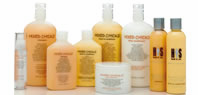
Mixed Chicks


Mixed Chicks Hair Care Products (Good Guys)

sallys rip off


Sally Beauty Supply Mixed Version (Scum Guys)

The trio will also be seeking additional funds for attorney’s fees, a portion of Sally Beauty’s profits of Mixed Silk products and an order to ban the selling of Mixed Silk products. Sally’s beauty supply no longer has a link to there product and when we called they would not answer any questions about the Victory lawsuit Mixed Chicks had with them.

Mixed Silk’s packaging is strikingly similar to that of Mixed Chicks. The pump top on the shampoo & leave-in conditioner is quite convenient for shower use. Silk Elements should have adopted the same design for the deep conditioner; opening and closing it while in the shower is a little time consuming. All of the products have the same strong manufactured fragrant smell. So lady’s and gentlemen you have read it all. Another scum bag company playing and stealing off a entrepreneurs idea. And who needs manufacturers like that in our beauty industry. Of course you will see them at the hair shows and think twice of the hard work a entrepreneur within our industry has to go through to get there product out to the consumer.

The Real Hair Truth!


Sally Beauty Supply Hacked!

The Real Hair truth

The corporate hacks keep coming. The latest target, according to cyber security blogger Brian Krebs, is the beauty supply chain Sally Beauty, a retailer that draws customers from salons and other stylists. A new batch of 282,000 stolen debit and credit cards were posted for sale this week on underground marketplaces, and Krebs believes they have been used at one of Sally Beauty’s 2,600 stores. It’s the latest scoop from Krebs, who has managed to penetrate the criminal underground to break major stories including the Target and Neiman Marcus hacks. He used a similar technique to help triangulate the source of the Sally Beauty data breach, working with banks to buy back some of their compromised cards and analyze which stores had transactions on each account.

Krebs says the underground marketplaces offering the stolen Sally Beauty card data were also affiliated with the same young Ukrainian man whom he has linked to sales of data purloined from Target. Sally Beauty’s spokeswoman Karen Fugate walked Krebs through the company’s efforts to investigate a possible breach. She said the retailer first noticed suspicious activity around Feb. 24, but so far investigators, including Verizon Enterprise Solutions, have been unable to detect any hacks.

The highly publicized Target breach, coming in the middle of the key holiday shopping season, helped drag down store traffic this winter. But investors have rallied behind the company recently as Target moves to repair the damage caused by the hack. Today, Target announced an overhaul of its security operations, bringing in a new high-level executive to replace the outgoing head of information security, Beth Jacob, who resigned today. The rash of retail-related breaches has intensified the battle between banks and retailers over who should be responsible when a store is hacked. Just minutes before the Sally Beauty news broke, the National Retail Federation submitted a statement to the House asking Congress to resolve the feud in a “holistic fashion.“